Central Asia Fights for Climate Justice at COP30 as Glaciers Melt and Pressures Mount
From Glaciers to Green Goals: Central Asia at COP30

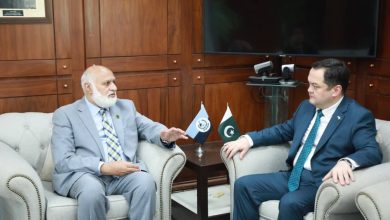
Minister of Ecology and Natural Resources of Kazakhstan, Yerlan Nyssanbayev; image: TCA, Aleksandr Potolitsyn
The UN Climate Change Conference (COP30) in Belรฉm, Brazil, closed with a hard-won agreement that expands climate finance for developing nations but sidesteps any commitment to phase out fossil fuels. Amid this uneasy outcome, Central Asian countries worked intensively to put their climate priorities on the global agendaโpushing for stronger funding, recognition of their unique vulnerabilities, and backing for regional cooperation. Their efforts achieved mixed but notable results.
A Regional Push for a Unified Climate Voice
Central Asiaโhome to over 80 million peopleโentered COP30 determined to act as โfive countries, one voice,โ a unified stance shaped during a pre-summit regional dialogue in Dushanbe. The region has already warmed about 2.2ยฐC, far above the global average, and its glaciers are shrinking at an estimated 0.5% annually, Uzbekistanโs environment minister Aziz Abdukhakimov warned in Belรฉm. He described accelerating land degradation and declining water resources as clear signs of the regionโs high vulnerability.
Uzbekistan introduced a new pledge to cut greenhouse gas emissions by 50% by 2035 (relative to 2010 levels), focusing on scaling renewable energy and expanding forests. These efforts align with COP30โs call for developed countries to triple adaptation finance by 2035. UN climate chief Simon Stiell praised the summitโs outcome as proof that global climate cooperation โis alive and kicking,โ despite geopolitical divides.
National Commitments and Notable Initiatives
Kazakhstan, the regionโs largest economy and emitter, maintained a prominent presence at COP30. Led by Minister of Ecology and Natural Resources Yerlan Nyssanbayev, the delegation reaffirmed Kazakhstanโs support for the Paris Agreement and highlighted its โRevised Nationally Determined Contribution (NDC)โ and new National Adaptation Plan, both featuring heightened ambition. Nyssanbayev stressed the importance of climate finance and endorsed the new โBakuโBelรฉm Roadmap,โ aimed at mobilizing $1.3 trillion annually by 2035.
Kazakhstan also became one of only seven countriesโand the sole nation from Central Asiaโto sign a declaration targeting โnear zeroโ methane emissions from the fossil fuel sector. Nyssanbayev further announced that Kazakhstan will host a Central Asia Regional Environmental Summit in 2026 to sustain regional momentum beyond COP30.
Kyrgyzstan used the conference to elevate the global mountain agenda. As chair of the UNFCCCโs Mountain Group, the country highlighted the vulnerability of high-altitude communities. The delegation, led by Deputy Cabinet Chairman Edil Baisalov and Special Representative Dinara Kemelova, warned that Central Asiaโs โwater towersโโits glaciers and snow reservesโare rapidly retreating. On November 14, Kyrgyzstan held multilateral consultations on mountains and climate change, drawing support from over 30 countries, including partners such as Nepal and Bhutan.
While its proposal for a Mountain Resilience Hub in Bishkek remains under debate, Kyrgyzstan reported growing international backing. A tangible regional win was the signing of a $250 million โGlacier to Farmโ project between the Asian Development Bank and Green Climate Fund, designed to help communities across Central Asia, the Caucasus, and Pakistan adapt to glacier melt and rising water stress.
Tajikistan, with more than 93% mountainous terrain, centered its message on glacier protection and water security. Bakhodur Sheralizoda, head of the Committee for Environmental Protection, highlighted the erosion of over 1,000 Tajik glaciers in recent decades. The delegation promoted the โGreen Tajikistanโ program, aiming to plant two billion trees by 2040 to combat erosion, restore land, and capture carbon. Tajikistan also celebrated its success in securing the UNโs declaration of 2025 as the International Year of Glacier Preservation, urging greater financial support for adaptation and cryosphere research.
Uzbekistan showcased updated climate targets within its long-term goal of carbon neutrality by 2050. The revised NDC includes stronger commitments under the โGreen Economyโ framework: expanding renewable energy, improving efficiency, and restoring degraded land. Plans include reaching 12,000 MW of renewable capacity by 2030 and doubling energy efficiency in key sectors. Uzbekistan also promoted efforts to increase forest cover to 6.1 million hectaresโincluding reforestation in the Aral Sea zoneโand expand protected areas to 14.5% of national territory. The delegation stressed that climate finance is essential for executing these plans.
Turkmenistan, a major global methane emitter, participated as part of the regional bloc. While it announced no new targets, the delegation engaged in methane reduction and water management discussions. Though not part of the Global Methane Pledge, Turkmenistan has begun cooperation with UNEP and the Global Methane Initiative to assess emissions. Officials voiced support for deeper dialogue on renewable energy and water security. The countryโs 2023 National Youth Climate Statement, developed with UN support, reflected rising public engagement in climate issues.
A Call for Resourcesโand a Path Forward
Throughout COP30, Central Asian nations repeatedly emphasized the need for more financial and technological support. The final agreementโs call for tripling adaptation finance by 2035 was welcomed across the region, given shared exposure to severe climate impactsโfrom vanishing glaciers to drought and extreme heat.
Regional mechanisms such as the Central Asia Climate Dialogue and the Regional One Health Coordination Council have gained momentum and were highlighted in COP30 side events. Speakers stressed that collaborative financing and technology transfer are crucial for meeting Paris Agreement commitments.
Kyrgyz Minister of Natural Resources Meder Mashiev summed up the regionโs predicament, noting that Kyrgyzstan is a country with โlow emissions but high climate vulnerability.โ While the five Central Asian nations face different climatic pressuresโfrom the Pamirs to the Aral Seaโthe collective message from Belรฉm was unmistakable: they are committed to action but require international support to succeed.