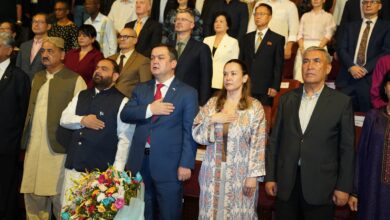
A photo exhibition titled “Uzbekistan Through the Lens of Pakistani Photographers” was inaugurated at the Pakistan National Council of the Arts (PNCA), offering a compelling visual narrative of Uzbekistan’s rich historical, cultural and architectural heritage as seen through the eyes of Pakistani photojournalists.
Speaking at the opening ceremony, Federal Minister for Information and Broadcasting Attaullah Tarar announced the launch of a journalists and photojournalists exchange programme between Pakistan and Uzbekistan, aimed at strengthening mutual understanding and exposing media professionals to the culture, history and heritage of both countries.
 The exhibition features photographs captured by Pakistani photojournalists who recently visited Uzbekistan on an official invitation. Their work documents the country’s landscapes, historic monuments, sacred sites and everyday life, presenting a nuanced and human-centred portrayal of Uzbek society.
Commending the photographers, the minister said their images successfully captured rare scenes, people and places, reflecting both artistic excellence and journalistic depth. He added that, in collaboration with the Ministry of Culture and National Heritage, a comprehensive strategy would be developed to promote Pakistan’s culture, history and heritage internationally. Such initiatives, he noted, were vital for projecting Pakistan’s soft image and highlighting its rich civilisational legacy on the global stage.


Federal Minister for Culture and National Heritage Aurangzeb Khan Khichi also praised the photographers, describing the exhibition as a bridge between two friendly nations. He assured continued institutional support for cultural and artistic initiatives, emphasising that cultural exchanges, exhibitions and people-to-people contacts play a crucial role in strengthening bilateral relations and fostering mutual respect and understanding.
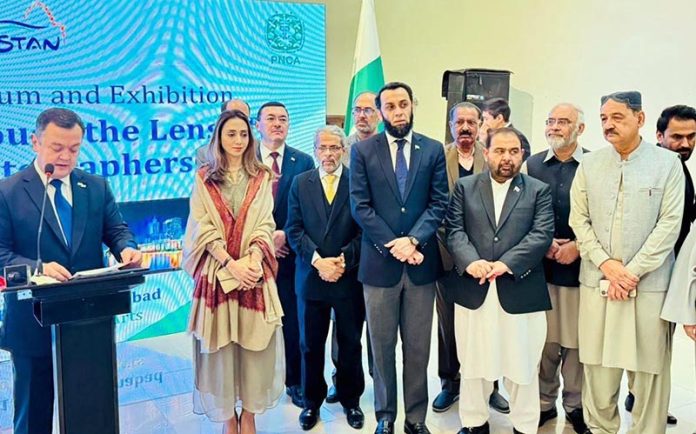 Addressing the gathering, Ambassador of Uzbekistan Alisher Tukhtaev said the exhibition was part of an initiative implemented by the Embassy of Uzbekistan from August 2 to August 7, 2025, under the title “Uzbekistan Through the Lens of Pakistani Photographers.” As part of the project, five renowned Pakistani photographers — Ramzan Mughal, Azhar Hafeez, Shahid Qureshi, Tariq Sulemani and Gulraiz Ghouri — travelled across Tashkent, Andijan, Ferghana, Samarkand and Bukhara.
Through their creative vision, the ambassador said, the photographers captured not only the architectural grandeur of Uzbekistan’s ancient cities but also its spirit — reflected in vibrant streets, sacred spaces, historic monuments and timeless landscapes. He noted that their work offered an authentic and heartfelt perspective, allowing Uzbekistan to be seen through the eyes of Pakistani friends.
As a result of the project, a special photo album and a curated collection of images have been published and are being presented to visitors. “This project is more than an exhibition of images; it is a symbol of friendship, trust and cultural closeness between our two nations,” the ambassador said, highlighting the centuries-old historical ties and shared cultural affinities between Uzbekistan and Pakistan.
Managing Director of the Pakistan Tourism Development Corporation Aftab ur Rehman Rana and Director General PNCA Muhammad Ayoub Jamali also addressed the ceremony, appreciating the photographers for their contribution to cultural diplomacy.
Speaking on behalf of the photographers, Muhammad Ramzan Mughal said it was an honour to be part of the project. He shared that the visit, supported by the Embassy of Uzbekistan in Islamabad and the Tourism Committee of Uzbekistan, allowed the team to document not just places, but history, culture and the spirit of the people.
Describing their journey, Mughal said Tashkent impressed with its modernity, wide roads, green parks and historic monuments coexisting side by side, while Chorsu Bazaar reflected everyday Uzbek life and the Khast Imam Complex embodied deep spiritual heritage. In Ferghana, the team witnessed living traditions through skilled artisans working with clay, silk and embroidery. Samarkand, he said, felt timeless, with landmarks such as Registan Square and Shah-i-Zinda narrating stories of the Silk Road, while Bukhara appeared like an open-air museum, its streets, forts and mosques echoing centuries of history.
He expressed gratitude to the Uzbek embassy for providing a once-in-a-lifetime opportunity and praised the warmth and hospitality of the Uzbek people. Concluding his remarks, Mughal said initiatives like the exhibition help bring nations closer, strengthen mutual understanding and open new avenues for cooperation.