Uzbekistan Marries Heritage with Reform to Emerge as Regional Investment and Education Hub


Uzbekistan, long renowned for its rich history and cultural legacy, is increasingly positioning itself as a rising destination for global investment and innovation, UzDaily reports.
Swedish pracademic Alex Matrsson, known for bridging academia and business across continents, describes Uzbekistan as a nation where heritage, ambition, and transformation intersect. Speaking to Uzbek media via The Caspian Post, he highlights how education, entrepreneurship, and culture are shaping a new era of national progress.
Education Driving National Renewal
Matrsson notes that Uzbek universities have evolved beyond traditional teaching institutions into centers of innovation and applied research. Modern curricula, international partnerships, and government-backed reforms are fostering critical thinking, entrepreneurship, and leadership among students.
He emphasizes that higher education in Uzbekistan is increasingly focused on real-world impact, preparing graduates not just for jobs but for nation-building. Investments in digital infrastructure and curriculum modernization are creating fertile ground for research and innovation, with students actively involved in entrepreneurial projects and global collaborations.
-
 PU CEMB hosts COMCEC & COMSTECH funded 4-day international training workshopSeptember 22, 2026
 -
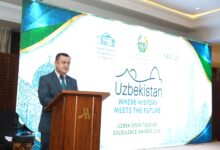 Uzbekistan: Where History Meets the FutureSeptember 1, 2026
Matrsson is directly engaged with several Uzbek universities, leading initiatives that strengthen academia–industry ties and align with the UN Sustainable Development Goals, including quality education, gender equality, economic growth, innovation, and global partnerships. He also praises Uzbekistan’s government institutions for their efficiency, transparency, and strong support for international academic cooperation.
Economic Momentum Across Key Sectors
Beyond education, Matrsson views Uzbekistan as a fast-emerging economic powerhouse in Central Asia. Its strategic location, youthful population, and reform-driven policies are attracting growing international interest.
Sectors such as energy, manufacturing, technology, and agriculture are being modernized, supported by streamlined regulations, improved logistics, and targeted investment incentives. These reforms, he says, are transforming the business climate and positioning Uzbekistan as a regional hub for multinational companies.
Matrsson himself is facilitating partnerships between global investors and Uzbek enterprises, helping establish research centers, innovation hubs, and joint ventures that link government, academia, and industry.
Culture at the Heart of Progress
Matrsson frequently highlights Uzbekistan’s cultural depth and hospitality, describing its people as among the warmest he has encountered. He speaks fondly of Uzbek traditions and cuisine, noting how everyday life reflects a strong sense of community and continuity.
For him, Uzbekistan’s ability to honor its past while building its future is one of its greatest strengths.
UNESCO Milestone Signals Global Recognition
In a historic first, UNESCO has selected Samarkand to host its 43rd General Conference — the first time in four decades the event will be held outside Paris. Matrsson says the decision reflects global recognition of Uzbekistan’s reforms in education, culture, science, and information.
He notes that Samarkand’s Silk Road heritage makes it a powerful symbol of how Uzbekistan blends history with modern ambition. The conference is expected to showcase national efforts in heritage preservation, digital education, and youth and women empowerment, positioning the country as a leader in cultural diplomacy and global dialogue.
A Nation Poised for the Future
Matrsson sees Uzbekistan at a pivotal stage of development, where intellectual capital, economic reform, and human values are converging to drive lasting progress. He believes sustained cooperation between governments, universities, and industries will be key to the country’s continued rise.
A seasoned academic, entrepreneur, and international business advisor, Matrsson advocates a pragmatic, innovation-driven approach to education and development, with research focused on emerging markets, trade promotion, and business resilience.
For him, Uzbekistan stands as a compelling example of how a nation can transform heritage into a foundation for modern growth — balancing history with forward-looking reform to shape a prosperous future.