Babur’s Shared Legacy can strengthen Pakistan-Uzbekistan Rrelations: Envoy
Uzbek Ambassador Alisher Tukhtaev says the Mughal emperor’s enduring contributions offer a powerful foundation for cultural, academic and people-to-people cooperation.

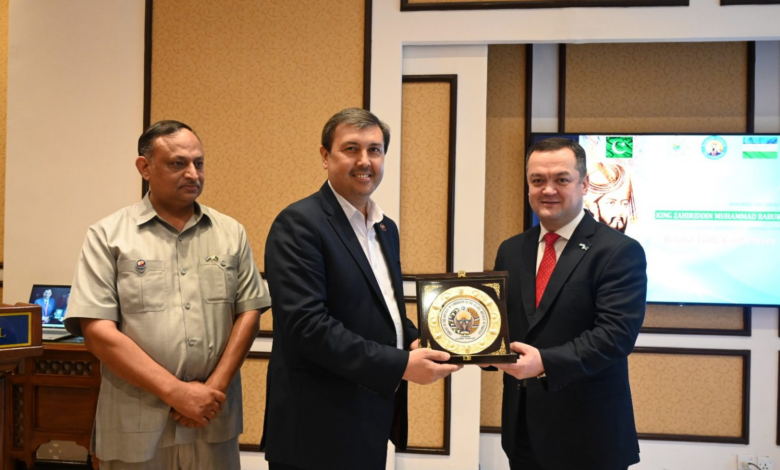
ISLAMABAD: Uzbekistan’s Ambassador to Pakistan, Alisher Tukhtaev, has described Zahiruddin Muhammad Babur as a shared civilizational figure whose legacy continues to connect Central and South Asia and can serve as a bridge for stronger relations between Uzbekistan and Pakistan.
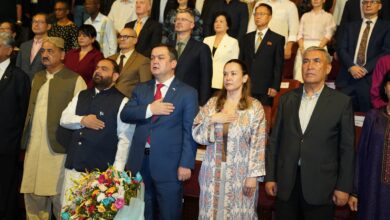
Addressing a roundtable conference titled “Zahiruddin Muhammad Babur: A Shared Civilizational Legacy and a Bridge for Pak-Uzbek Relations,” organised by the Baburi Forum in Islamabad, the ambassador said Babur was not only a statesman and military leader but also an accomplished poet, writer, thinker and perceptive observer of nature and society.
“At the heart of this shared historical narrative stands Zahiruddin Babur, a son of Andijan in present-day Uzbekistan, whose extraordinary life connected Central Asia with South Asia in an unprecedented way,” Tukhtaev said.
 He described the Baburnama as one of the most significant autobiographical and historical works of the medieval Muslim world, providing an exceptional account of the societies, landscapes and cultures of Central Asia and the Indian subcontinent.


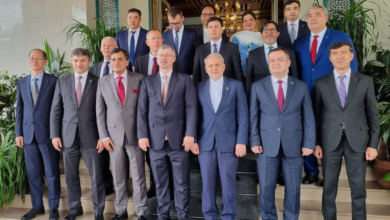
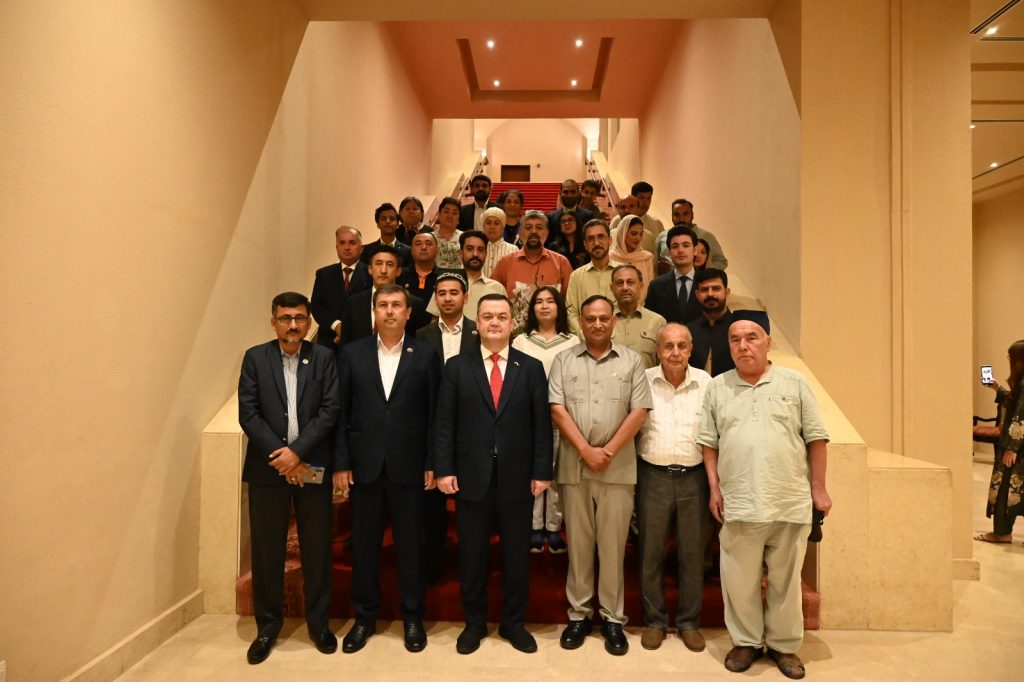
The conference brought together Parliamentary Secretary for National Heritage and Culture Farah Naz Akbar, Deputy Chairman of the Babur International Public Foundation Rustam Mamasoliev, Baburi Forum President Ramzan Mughal, and historians, scholars and researchers from Pakistan and Uzbekistan.
Welcoming the visiting Uzbek delegation, Tukhtaev said exchanges among scholars and cultural institutions could further deepen the intellectual and cultural relationship between the two countries.
“For Pakistan, Babur and his heritage represent an important part of the country’s rich civilizational history. For Uzbekistan, Babur remains an important symbol of our nation’s contribution to world history and culture,” he said.
The ambassador stressed that Babur belonged to both countries not merely as a historical personality but as a shared civilizational legacy. He said the Baburid period left a lasting imprint on South Asia’s architecture, literature, art, governance, science and culture, with its influence still visible across Pakistan and the wider region.
He noted that the shared heritage of Pakistan and Uzbekistan extended far beyond one ruler or dynasty and encompassed centuries of interaction through scholarship, spirituality, literature, architecture, commerce and the movement of people and ideas.
Such scholarly gatherings, he said, provide an opportunity not only to study history but also to explore how a common past can strengthen friendship and cooperation in the present.
Tukhtaev appreciated the Government of Pakistan’s efforts to preserve and promote the two countries’ shared historical and cultural heritage, including the legacy of Babur and the Baburid era.
He said Pakistan-Uzbekistan relations were rooted in centuries of cultural affinity, intellectual exchange and human connections that predated the establishment of modern diplomatic ties.
“Today, the relationship between Uzbekistan and Pakistan is entering a new and dynamic stage,” he said, crediting Uzbek President Shavkat Mirziyoyev and Prime Minister Muhammad Shehbaz Sharif with giving fresh momentum to bilateral cooperation.
According to the ambassador, regular high-level engagements, reciprocal visits and sustained political dialogue have established a strong foundation for expanding cooperation in trade, investment, transport, regional connectivity, education, science, tourism and culture.
He said the elevation of bilateral relations to a strategic partnership reflected the depth of mutual trust and a shared commitment to developing a broader and more substantive relationship.
“In this context, common historical heritage is not simply a matter of the past. It is an important asset for the future,” Tukhtaev said.
Babur’s journey from Andijan to the Indian subcontinent demonstrated that Central and South Asia had never existed as isolated regions but remained interconnected through culture, history and human movement, he added.
The ambassador called for transforming this historical connection into practical opportunities, including joint academic research, educational partnerships, cultural exchanges and heritage tourism.
“Babur’s life began in Andijan and eventually brought him to the Indian subcontinent. Centuries later, the historical journey that once connected our regions has evolved into a modern partnership between two sovereign and friendly states,” he said.
“In this sense, Babur is not only a figure of our shared past; he can also be a bridge to our shared future.”
Tukhtaev urged historians, universities and cultural institutions in both countries to work together to study, preserve and promote Babur’s legacy, enabling future generations to understand the depth of their intertwined histories.
He also thanked Baburi Forum President Ramzan Mughal for convening the conference and acknowledged Farah Naz Akbar’s participation in the event.
Speaking on the occasion, Mughal said the Baburi Forum was an intellectual and literary platform dedicated to research and to narrowing cultural and civilizational gaps between Pakistan and Uzbekistan.
He said the forum sought to bring the two countries closer by promoting their shared history, literature and cultural heritage.
“We want to transfer this civilizational and cultural heritage to our youth and introduce them to our common literature, poetry and scholars who form part of the common history of both sides, so that they can reconnect with their historical roots,” Mughal said.
The conference concluded with a renewed commitment to expanding scholarly, cultural and people-to-people exchanges and using Babur’s shared legacy as a foundation for closer relations between Pakistan and Uzbekistan.