Eclectic Regionalism in Central Asia? The 7th Consultative Meeting of Heads of States


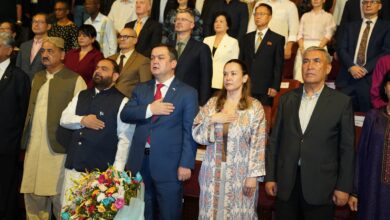
The 7th Consultative Meeting of Heads of States (CMHS) of Central Asia, held in Tashkent on November 14–15, 2025, marked a turning point in the region’s 34-year experiment with integration since independence. For the first time, long-anticipated signs of institutionalization emerged—alongside the highly consequential decision to admit Azerbaijan into the format. Together, these steps make the Tashkent gathering the most significant CMHS to date, with potentially far-reaching implications for the trajectory of Central Asian regionalism and its geopolitical meaning.
Background
The CMHS format was initiated in 2017 by Uzbekistan’s President Shavkat Mirziyoev. Since then, six consultative meetings have taken place, reviving regional dialogue after nearly a decade of stagnation between 2006 and 2016, when Central Asian states largely limited themselves to bilateral engagement.
Earlier efforts at regional integration between 1991 and 2005 were derailed after the Central Asian Cooperation Organization (CACO) merged with the Russia-led Eurasian Economic Community following Russia’s accession. This effectively dissolved an autonomous Central Asian framework. It was not until 2018, with the first CMHS in Astana, that the region re-established its own consultative structure. Subsequent meetings were held in Tashkent (2019), Avaza (2021), Cholpon-Ata (2022), Dushanbe (2023), and Astana again in 2024.

The CMHS has produced a mixed legacy. On the one hand, it has demonstrated sustained political will to strengthen cooperation. On the other, Central Asian leaders have consistently avoided explicit commitments to integration, reflecting concerns that deeper institutionalization might erode national sovereignty. This tension has long constrained strategic thinking about the region’s future.
That caution was evident at the 6th CMHS, when leaders adopted the Central Asia–2040 Concept of Regional Cooperation, a document that deliberately avoided the language of integration. By contrast, the 7th meeting in Tashkent moved decisively toward institutional development. Presidents agreed to establish a permanent Secretariat, rename the CMHS as the Central Asian Community (CAC), elevate national coordinators to Special Representatives of Heads of State, and adopt a Concept of Regional Security based on a shared Catalogue of Risks.
The most controversial decision, however, was the admission of Azerbaijan into what had previously been the “C5” framework.
Implications
Central Asia’s first integration institutions emerged in the 1990s, including councils of heads of state and foreign ministers, and even early attempts to form a regional parliament. Today’s leaders appear intent on reviving this legacy—albeit without openly embracing the term “integration.”
The six earlier CMHS meetings succeeded in restoring regionalism as a guiding principle and contributed to a broader geopolitical recalibration. One visible outcome has been the proliferation of “C5+1” formats, reflecting Central Asia’s growing collective profile in international diplomacy.
As host and initiator of the CMHS process, Uzbekistan was widely expected to push the integration agenda forward at the Tashkent summit—and it largely did so. Renaming the format the Central Asian Community recalls the Central Asian Economic Community (1994–2000), whose success paved the way for CACO. The new designation carries the promise of stronger political cohesion, but its credibility will depend on whether it represents a genuine upgrade in political status rather than a symbolic gesture.
Old challenges persist, particularly the reluctance to coordinate foreign policy on key regional and global issues. Against this backdrop, the adoption of a Concept of Regional Security and a Catalogue of Risks for 2026–2028 stands out as a significant step. The creation of a regional security architecture has been discussed before, but the Catalogue now clarifies the nature of shared threats and the mechanisms for addressing them. Given the dense web of strategic partnerships and alliances among Central Asian states, this initiative offers a real test of their willingness to act collectively.
President Mirziyoev also advanced a normative proposal aimed at strengthening regional identity: the creation of a Council of Elders composed of respected public figures. Rooted in shared values and traditions of public diplomacy, the council would promote generational continuity, regional solidarity, and citizen engagement. This was a clear signal that regional integration should extend beyond elites and institutions to involve society at large—an element largely missing so far.
Azerbaijan’s Admission: Opportunity or Disruption?
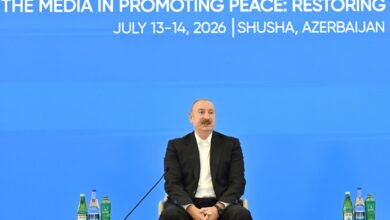
The presence of Azerbaijan’s President Ilham Aliyev in Tashkent underscored the summit’s most debated outcome: Azerbaijan’s formal admission into the Central Asian structure. This decision raises fundamental questions about the transformation of a five-member format into a six-member one—and about the implications of bringing a South Caucasus state into a Central Asian framework.
Former Uzbek Foreign Minister Abdulaziz Komilov has described Azerbaijan’s membership as the creation of a new geopolitical reality. The precedent of Russia’s admission into CACO in 2004—which ultimately undermined that organization—looms large. Azerbaijan, however, is not an imperial power and lacks hegemonic ambitions, making its role qualitatively different.
Azerbaijan already maintains close ties with Central Asian states, and, with the exception of Tajikistan, they are jointly members of the Organization of Turkic States. Baku’s geopolitical experience could offer useful lessons. At the same time, its participation could significantly reshape the integration process. Whether Azerbaijan can play a distinctive role will depend on its ability to help Central Asia overcome a persistent weakness: the absence of a unified agency in the international system.
Notably, Azerbaijan’s deeper engagement has triggered criticism in Russian media and analytical circles, where it has been portrayed as a sign of pro-Western geopolitical maneuvering.
Conclusions
Past CMHS meetings generated numerous declarations and frameworks. The challenge now lies in implementation. Key questions remain unresolved: What practical authority will the Special Representatives wield? How transparent and effective will the Secretariat be? Can it avoid excessive bureaucracy and an overemphasis on sovereignty at the expense of cooperation?
Equally uncertain is the meaning of Azerbaijan’s membership. Will it prove to be an eclectic, symbolic expansion designed to showcase regionalism—or a strategic enlargement carefully calibrated to meet emerging geopolitical challenges?
The Central Asian Community now faces a new phase shaped by great-power rivalry, the consequences of Russia’s war in Ukraine, the diversification of transport and connectivity routes, and Central Asia’s rising quest for strategic autonomy. How the CAC navigates these pressures will determine whether the Tashkent summit becomes a foundation for genuine regional integration—or merely another milestone in an unfinished project.
Author’s Bio
Dr. Farkhod Tolipov holds a PhD in Political Science and is Director of the Education and Research Institution Bilim Karvoni (“Knowledge Caravan”) in Tashkent, Uzbekistan.