Central Asia–South Korea summit opens in Seoul, focusing on technology, investment and regional projects

SEOUL: The inaugural Central Asia–Republic of Korea Summit opened in Seoul at the heads-of-state level, marking a new stage in cooperation between South Korea and the five Central Asian countries.
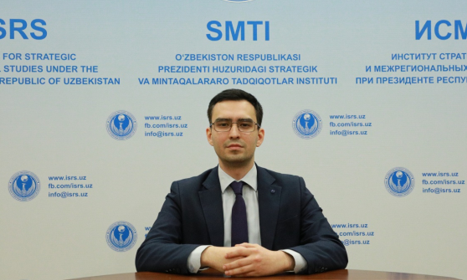
Ahead of the summit, Bekzod Normatov, Leading Research Fellow at the Institute for Strategic and Regional Studies under the President of Uzbekistan, said the new format could provide opportunities to elevate regional cooperation to a new level.
In a commentary published by Uzbekistan’s Dunyo, Normatov identified technological partnership, manufacturing localization, deep processing of raw materials, regional infrastructure projects and engineering education as key areas for expanded cooperation.
The summit represents an important step in the institutional development of relations between Central Asia and South Korea, which have evolved through political, economic, parliamentary, business and humanitarian channels.
The Republic of Korea–Central Asia Cooperation Forum, established in 2007, was followed by the creation of its Permanent Secretariat in 2017. An Economic Council became operational in 2020, while parliamentary speakers began meeting in 2023 and the first Think Tank Forum was held in 2024.
Normatov said the move from ministerial-level engagement to a heads-of-state format reflects the growing scale of cooperation and the emergence of new strategic priorities. These include trade, investment, energy, critical minerals and the resilience of global supply chains.
He noted that the interests of both sides are increasingly complementary, with South Korea offering advanced technology, capital and industrial expertise, while Central Asia possesses substantial natural resources, expanding markets and a strategic geographical position.
Critical minerals are expected to be among the important areas of cooperation. Central Asian countries possess significant mineral resources, while South Korea has advanced capabilities in their processing and industrial application.
Normatov stressed, however, that cooperation should not be limited to the export of raw materials from Central Asia to South Korea. He advocated an integrated production model covering geological exploration, extraction, processing, component manufacturing and production of finished goods.
According to the expert, localization of manufacturing, technology transfer, engineering training and joint access to third-country markets could provide a stronger foundation for long-term economic cooperation.
He also emphasized the importance of developing projects with a regional rather than exclusively bilateral character. Potential areas include cross-border production chains, digital logistics, energy infrastructure, water-saving technologies and joint training programmes.
South Korea’s technological capabilities in electronics, automobiles, batteries, artificial intelligence, power engineering, medicine, water management and industrial digitalization could complement Central Asia’s growing industrial base and resource potential, he said.
The expert also highlighted the importance of economic and supply-chain resilience amid disruptions affecting international transport, energy and manufacturing networks. He said Central Asian countries have an interest in developing alternative transport routes, localized production capabilities, technological expertise and skilled human resources.
Among the practical priorities identified by Normatov are a joint project portfolio for deep processing of critical minerals, mechanisms for financing regional projects, cooperation in artificial intelligence and industrial digitalization, water-efficiency technologies and expanded training of engineering and technical specialists.
He argued that the success of the summit should ultimately be assessed by whether cooperation moves beyond conventional trade and investment toward joint manufacturing, technology development and human-capital formation.
For Uzbekistan, the summit carries particular importance because of its existing strategic partnership with South Korea. Normatov said Tashkent could contribute to expanding successful bilateral cooperation into projects involving several Central Asian states.
The expert said the emerging model could combine Central Asia’s resources, markets and strategic location with South Korea’s technology, capital and expertise to produce higher-value goods within the region.
He concluded that such an approach could give the Central Asia–Republic of Korea format greater practical substance and increase its economic benefits for the countries of the region.