The prospect of peace between Armenia and Azerbaijan is increasingly exposing tensions between Baku and its other South Caucasus neighbor, Georgia.
In recent weeks, two Azerbaijani media outlets widely regarded as reflecting official sentiment have published a series of sharply worded reports accusing the Georgian government of obstructing Azerbaijani trade. The articles claim Tbilisi is deliberately seeking to undermine the provisional Armenian-Azerbaijani peace agreement signed in Washington in August.
According to these reports, Georgia’s alleged actions are driven by multiple motives. One is concern that the proposed TRIPP trade corridor—the centerpiece of the peace deal—could sideline existing transit routes through Georgia. Another is the suggestion that Tbilisi may be acting in line with Kremlin interests, aiming to keep both Yerevan and Baku within Russia’s geopolitical and economic orbit.
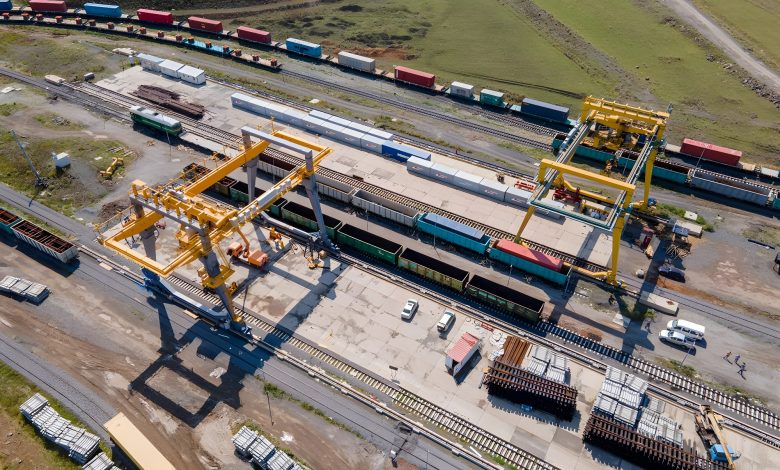
As Armenian and Azerbaijani officials continue the slow process of finalizing the peace agreement and operational details of TRIPP, Azerbaijan’s international trade by road and rail remains heavily dependent on Georgia. Direct transport links between Armenia and Azerbaijan were severed during decades of conflict and will require substantial investment to restore.


“Today, Georgia is effectively acting against the formation of a stable regional peace architecture and mutually beneficial economic ties,” stated a December 5 commentary published by Minval Politika. “At a time when the South Caucasus has a unique chance to move from the logic of conflict to the logic of development, Tbilisi’s behavior looks like an attempt to slow down this transition.”
The roots of the dispute date back to September, when complaints reached Baku that Azerbaijani truck drivers were being harassed at Georgian border checkpoints. A report by Caliber alleged that drivers were being stopped without clear justification and subjected to lengthy delays. The article said some drivers were told by Georgian border officials to “go through Zangezur,” a pointed reference to the planned TRIPP corridor.
“Against the backdrop of Georgia’s decades-long monopoly in regional logistics, even the possibility of an alternative route is perceived in Tbilisi as a painful development,” the Caliber report said.
Tensions escalated in early December following a meeting of a joint border commission. At the meeting, Baku reportedly raised the issue of exporting oil and petroleum products via Georgia to Armenia and asked Tbilisi to determine transit fees. According to Minval Politika, Georgian officials responded with an exceptionally high tariff—far above the rates Azerbaijan already pays for other transit goods—describing the move as an attempt “to break the peace.”
Georgian officials have rejected the accusations. Prime Minister Irakli Kobakhidze insisted there had been “only one truck delay,” and said it occurred for a specific reason. He added that Georgia was “ready to have a very friendly conversation about all possible difficulties.”
Kobakhidze later instructed Georgian Railways to allow Azerbaijani fuel shipments to Armenia to transit tariff-free as a one-time goodwill measure. “We have always been and are supporters of peace and cooperation in the region,” Georgia’s Ministry of Economy said in a statement.
The gesture, however, failed to placate Baku. In a December 10 commentary, Minval Politika said Azerbaijan was still waiting for a “serious approach” rather than “one-time gestures of goodwill.” The article added that Baku was considering restoring a Soviet-era rail link to the Armenian border in response to what it described as Georgia’s “tariff demarche.”
The commentary also echoed earlier suggestions that Georgia’s deepening ties with Russia may be influencing its position—a theme first raised by Caliber. Moscow has a strong interest in preserving its dominant trade role with Armenia, which in 2025 has taken notable steps to strengthen ties with the European Union and the United States.
Earlier this year, Georgian customs authorities were accused of disrupting Armenian cargo flows during a period of rising prices in Armenia. Some observers argued at the time that Tbilisi was cooperating with Moscow to pressure Yerevan into moderating its westward geopolitical shift.