Pakistan Pushes for Tri-Continent Maritime Bloc Linking GCC, Central Asia & Africa

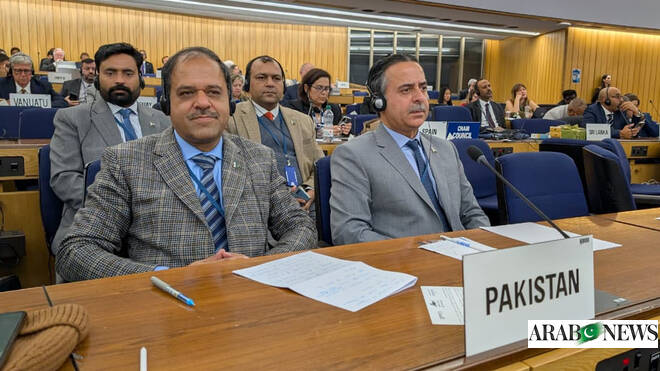
Pakistan has proposed the creation of a “Regional Maritime Dialogue” bringing together countries from the Gulf Cooperation Council (GCC), Central Asia, and Africa to tackle shared maritime challenges, strengthen cooperation, and shape global maritime policy.
Federal Minister for Maritime Affairs Muhammad Junaid Anwar Chaudhry unveiled the initiative during a high-level breakfast reception hosted by Pakistan at the International Maritime Organization (IMO) headquarters in London, according to a press release. The event drew delegations from more than 173 countries and over 100 maritime ministers—one of the largest gatherings during IMO Assembly week.
During the reception, Chaudhry and IMO Secretary-General Arsenio Dominguez jointly inaugurated a model of the PNSC Ship KARACHI, one of three new vessels Pakistan plans to induct under the names KARACHI, LAHORE, and QUETTA.
Chaudhry stressed that the rapidly evolving maritime environment demands regional mechanisms capable of collectively responding to operational, environmental, regulatory, and technological pressures. The proposed dialogue would prioritize reducing carbon emissions, enhancing safety at sea, improving search and rescue coordination, and reinforcing navigational safety.

Pakistan currently manages NAVAREA IX—covering the Arabian Sea, Gulf waters, and parts of the Indian Ocean—ensuring timely navigational warnings under the World-Wide Navigational Warning Service (WWNWS) of the IMO and International Hydrographic Organization (IHO).
The minister also proposed establishing a Regional Maritime University and a Regional Maritime Training Institute to deliver education aligned with emerging IMO rules, autonomous shipping, digitization, and artificial intelligence. These institutions would focus on AI-enabled compliance with Standards of Training, Certification, and Watchkeeping (STCW) to prepare Pakistan’s and the region’s seafarers for next-generation maritime operations.
Pakistan additionally plans to develop a domestic terminal as part of a wider maritime modernization strategy, while ongoing projects—such as reviving the Gadani shipyard near Gwadar—are being advanced in line with IMO safety and sustainability standards.
Chaudhry underscored Pakistan’s ambition to deepen maritime cooperation with partners including Saudi Arabia, the UAE, Qatar, other GCC states, Central Asia, and Africa to build a durable, structured platform for regional dialogue. He also called for stronger representation of developing and climate-vulnerable nations in global decision-making forums, referencing the devastating, climate-induced floods that inflicted significant human and economic losses in Pakistan.
Drawing a comparison with the coalition-building success of Small Island Developing States (SIDS) within the IMO, Chaudhry said Pakistan aims to forge regional consensus to generate a unified voice on key maritime issues. He also pointed to Pakistan’s increasing focus on marine biodiversity, coastal resilience, environmental safeguards, and emerging maritime technologies.
The initiative positions Pakistan as a proactive actor seeking to shape global maritime rules while advancing sustainable development and regional maritime governance across three continents.