Glacier Lifelines
UNESCO and Zurich University of the Arts Launch a VR Journey Through Central Asia’s Glaciers

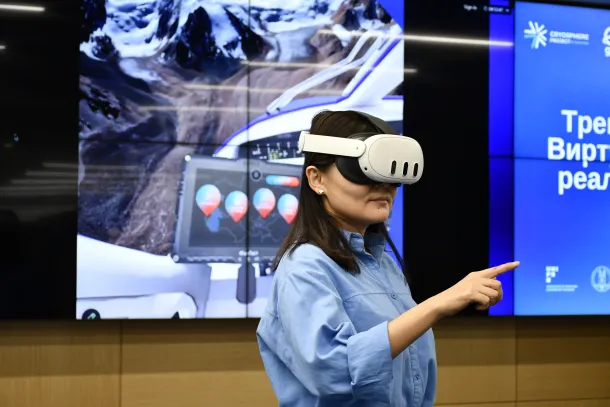
 The silent beauty of glaciers is vanishing in the heart of Central Asia. Climate change is causing these frozen giants, which were once the lifeline of rivers and communities, to rapidly shrink. UNESCO and the Zurich University of the Arts (ZHdK) have collaborated to develop the ground-breaking virtual reality (VR) experience “Glacier Lifelines” in order to bring attention to this pressing issue.
This project, which was started by the UNESCO Regional Office in Almaty, allows visitors to experience the breathtaking mountain scenery of Central Asia without ever leaving their room. Users can see, hear, and feel the world of glaciers and learn how global warming is altering it by donning virtual reality headsets. With assistance from the United Nations Development Programme (UNDP) and the Global Environment Facility (GEF), the project was created as part of the regional Cryosphere Project.
Through four interactive chapters, irrigation, hydropower, glacier monitoring, and disaster risk reduction, the “Glacier Lifelines” experience transports viewers to a real place in Central Asia and illustrates how melting glaciers impact local populations, water supplies, and natural systems. In one scene, users assist farmers who rely on glacier melt for irrigation, and in another, they observe the effects of glacier retreat on hydropower plants that supply cities with electricity. The interactive design enables users to participate in small missions and see how everyone can make a difference.
Also to being exquisite, the experience is extremely instructive. It simplifies difficult scientific information so that anyone can comprehend it. The project has a solid scientific basis thanks to actual data gathered by national institutions and the University of Fribourg.
This November, UNESCO and ZHdK organized a special training workshop in Almaty to make sure that “Glacier Lifelines” reach communities and classrooms. University representatives from Kazakhstan, Kyrgyzstan, Tajikistan, Turkmenistan, and Uzbekistan were led by visual designers Noemi Chow and Jonas Christen from ZHdK.
Participants in the training received instruction on how to use the VR headsets, take care of the equipment, and use the technology to teach about climate change. Soon, each partner university will get a set of virtual reality headsets, enabling local organizations, educators, and students to use this tool.

As designer Noemi Chow put it, “Virtual reality is a great tool to teach about climate change. It can take you to remote places, simulate real or future scenarios, and tell stories in a very emotional way. This creative storytelling can reach people on a different level.” The project’s strength is its ability to connect facts with feelings. While climate change is often discussed through data and numbers, “Glacier Lifelines” adds a human touch, allowing people to see what is happening and imagine what can be done.
Also to the VR experience, the project features a Knowledge Hub where users can examine additional scientific data, datasets, and anecdotes related to the experience. This blend of immersive technology and practical experience aids in bridging the gap between public understanding and science.
The region’s ecosystems, agriculture, and water security are all at risk due to the melting of Central Asia’s glaciers. Glacierfed Rivers are essential to the daily lives of millions of people. UNESCO and ZHdK hope to inspire the next generation to care, learn, and take action by transforming complex climate science into an emotional, visual journey.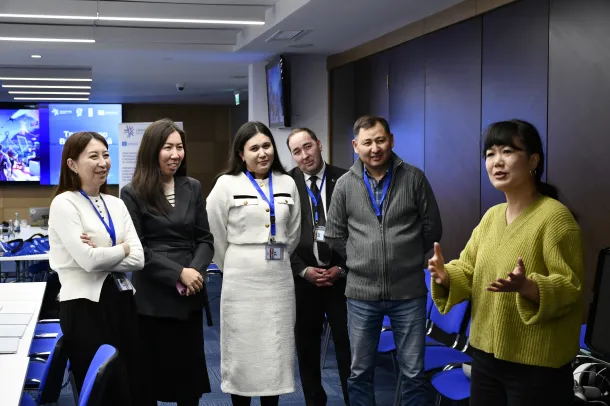
The “Glacier Lifelines” project serves as a reminder that education is about more than just facts; it’s also about connection, empathy, and experience. The story of Central Asia’s glaciers becomes a universal one thanks to the power of virtual reality.
This project is a shining example of how science and creativity can collaborate for the future of the planet as we enter the Decade of Action for Cryospheric Sciences. Even though the glaciers are melting, hope still flows from the mountains like water to everyone who chooses to care if they are aware, creative, and cooperative.
The author is a seasoned academic and a leading voice in environmental communication, with a focus on climate policy and community awareness. He can be reached at: amjad.unv@gmail.com