Kazakhstan Moves to Shield Energy Giants by Engaging U.S. Sanctions Watchdog Over Lukoil

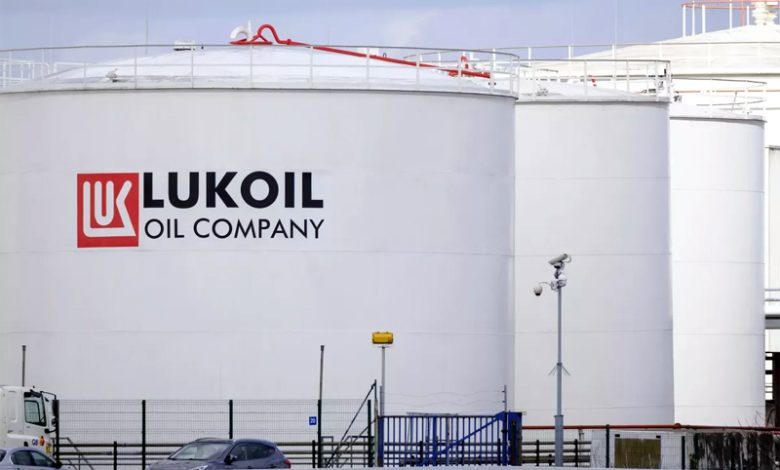
Kazakhstan’s decision to formally approach the U.S. Treasury’s Office of Foreign Assets Control (OFAC) regarding Lukoil’s involvement in key energy projects reflects a strategic effort to manage sanctions risk rather than a symbolic diplomatic gesture. By going directly to Washington’s sanctions authority, Astana aims to safeguard the operational stability and financial credibility of its most vital energy assets as global sanctions pressures, regional instability, and domestic production challenges intensify.
The issue extends beyond Lukoil’s minority ownership stakes to the broader question of whether Kazakhstan can continue presenting itself as a reliable, investable energy producer insulated from secondary sanctions and geopolitical fallout. The move seeks clarity on how to navigate U.S. sanctions mechanisms, identify viable divestment pathways, and secure the future of its flagship projects.
The immediate trigger was OFAC’s late-2025 designation of PJSC Lukoil, which sharply altered the risk profile of any venture involving the Russian firm. While the ruling did not mandate an automatic sell-off of overseas assets, it opened the door for sanctioned companies to divest foreign holdings under approved structures. For Kazakhstan, this distinction was critical.
Lukoil holds minority stakes in several cornerstone assets: the Tengiz oil field through the Tengizchevroil consortium, the Karachaganak gas-condensate project, and the Caspian Pipeline Consortium (CPC), Kazakhstan’s main crude export route to the Black Sea. In late January 2026, Kazakhstan formally submitted a request to OFAC tied to acquiring Lukoil’s interests in these ventures, citing contractual pre-emptive rights and the urgency created by sanctions.


The timing coincided with heightened operational stress. A major outage at Tengiz in January 2026 and repeated CPC export disruptions underscored how quickly production and revenue can be threatened. In that climate, unresolved sanctions exposure represented an additional risk Astana was determined to eliminate.
At the heart of Kazakhstan’s strategy is the protection of the “plumbing” of its oil economy. First, it seeks to preserve investor confidence in long-life projects developed by international consortia, where even minority sanctioned ownership can trigger compliance hurdles, frozen payments, and rising financing costs. Second, it aims to secure the CPC pipeline, a critical export chokepoint already vulnerable to regional tensions. Third, it is reducing exposure at a time when operational, political, and market risks are converging.
In practical terms, Kazakhstan’s options are limited by OFAC’s focus on ownership, control, and financial benefit. The preferred outcome is an OFAC-approved transfer of Lukoil’s stakes to a non-sanctioned buyer, most likely linked to Kazakhstan’s national oil company, delivering clean ownership and regulatory certainty. Interim ring-fencing structures could temporarily block benefits to Lukoil while approvals are processed, though these are seen as stopgaps. The least attractive scenario would leave Lukoil’s holdings frozen, creating governance complications and financial uncertainty.
The formal submission to OFAC now opens a detailed, technical review process involving transaction structures, financing, and safeguards to ensure no value flows back to sanctioned entities. At the same time, Kazakhstan must navigate joint-venture politics, as existing partners in Tengiz and Karachaganak will have a say in any ownership changes.
Astana is also managing the optics carefully. By engaging openly with OFAC, it is signaling to Western investors and policymakers that sanctions compliance takes precedence over improvised solutions. Parallel efforts are expected to stabilize production and exports while ownership risks are methodically removed.
Ultimately, Kazakhstan’s move is a pre-emptive effort to preserve the credibility and bankability of its energy sector under tightening global sanctions. Rather than marking a geopolitical shift, it reflects pragmatic risk management — eliminating legal uncertainty, securing export infrastructure, and reassuring partners that Kazakhstan remains a dependable energy producer.
The most likely outcome is a structured, OFAC-cleared exit for Lukoil that keeps Kazakhstan’s flagship projects financially and operationally secure. In an era where sanctions risk has become a permanent feature of global energy markets, Astana’s message is unmistakable: stability must be actively protected, and compliance is non-negotiable.