Turkmenistan Tops Global Methane Super-Emitter List as Satellites Expose Massive Gas Leaks

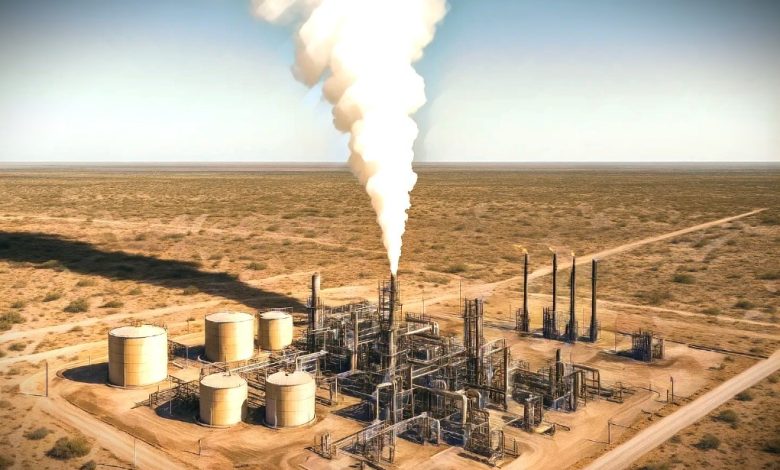
Turkmenistan has been identified as the world’s leading source of major methane emissions in the oil and gas sector, according to new satellite data published by the U.S.-based Stop Methane project. The findings — widely covered in Central Asian media — draw on observations from January 1 to November 12 this year.
Researchers at the University of California, Los Angeles, which heads the project, assembled the rankings using satellite imagery to pinpoint sites with the highest methane output over specific periods. The list highlights emission levels ranging from 3.7 to 10 tons per hour, rates considered significant contributors to atmospheric pollution.
Industrial facilities in Turkmenistan — especially near Esenguly and Turkmenabat in the Balkan province — dominated the rankings. Seventeen of the 25 highest-emitting sites were located in Turkmenistan, far more than any other country. The remaining entries came from Venezuela, Iran, Pakistan, and the United States.
Independent analysts say outdated Soviet-era pipelines, compressors, and separation units lie at the heart of Turkmenistan’s methane problem. Much of the country’s natural gas network has never been upgraded to modern leak-prevention standards, allowing colorless, odorless methane to escape undetected for long periods without satellite monitoring. Experts say low-cost fixes such as valve replacements, better maintenance, and continuous monitoring could sharply reduce emissions.


Stop Methane’s assessment is based on more than 3,000 methane plumes detected at roughly 2,000 oil and gas sites worldwide. Data came from the U.S.-operated Tanager-1 satellite, designed to monitor major extraction zones and capable of detecting leaks invisible from the ground.
The surge in detected leaks reflects improvements in satellite resolution rather than an actual spike in emissions. Where older instruments detected only catastrophic blowouts, new platforms such as Tanager-1 and NASA’s EMIT can now identify medium-sized leaks in near-real time. This shift has exposed a global methane footprint much larger than previously acknowledged, increasing pressure for transparency and reform.
Methane’s environmental impact is severe, contributing to both air pollution and climate warming. The leaks also represent a direct economic loss for Turkmenistan. The International Energy Agency estimates that most methane emissions can be cut at little or no net cost, as the captured gas can be sold. For a country reliant on gas exports, the volume escaping from super-emitter sites translates into millions of dollars in lost revenue each year. A site emitting five tons of methane per hour — mid-range on this list — produces annual pollution equivalent to one million SUVs or a large coal-fired power plant.
Methane releases have long been a concern in Turkmenistan. In 2019, environmental groups found that leaks at the Korpeje gas field in western Turkmenistan had the same annual climate impact as a million cars.
Despite this record, Turkmen authorities point to progress. At a regional climate forum in April, President Serdar Berdimuhamedov said methane emissions fell by 11% by the end of 2024, surpassing national targets. Yet satellite data still shows frequent large-scale leaks at major gas fields, raising doubts about the transparency and scale of official mitigation efforts. Analysts warn that without independent verification, the gap between government claims and satellite evidence could undermine Turkmenistan’s credibility in global climate negotiations.
Turkmenistan holds the world’s fifth-largest natural gas reserves — about 400 trillion cubic feet as of 2025 — and produced a record 3.0 trillion cubic feet of dry gas in 2023. China is its main buyer, but Ashgabat continues to seek new export markets. High methane emissions are becoming a geopolitical liability as major importers introduce stricter carbon standards. The European Union is preparing rules that could penalize gas with high upstream emissions, posing an obstacle to Turkmenistan’s ambitions to export through the Trans-Caspian route. The U.S. Department of Energy has similarly warned that elevated methane levels could hinder Turkmenistan’s access to European markets.
The country also holds an estimated 600 million barrels of oil and produced roughly 275,000 barrels per day in 2024. Across Central Asia, other oil- and gas-producing nations are confronting methane challenges, but Turkmenistan stands out due to the scale and frequency of its super-emitter sites. Kazakhstan and Uzbekistan also register significant leaks, though typically at lower levels and from fewer major locations. Analysts argue that the region’s reliance on aging infrastructure makes coordinated methane-reduction strategies increasingly urgent as international scrutiny intensifies.