Azerbaijan’s Foreign Policy Review 2025: A Comparative Study
Dr. Mehmood Ul Hassan Khan

 Under the decisive and farsighted leadership of President Ilham Aliyev, Azerbaijan successfully advanced its national interests in 2025 through a consistent, pragmatic, and multidimensional foreign policy. This assessment was reaffirmed by Azerbaijan’s Minister of Foreign Affairs, Jeyhun Bayramov, while summarizing the country’s diplomatic achievements for the year. Azerbaijan’s foreign policy remained results-oriented, balanced, and firmly grounded in national priorities, further strengthening its position on the global stage.
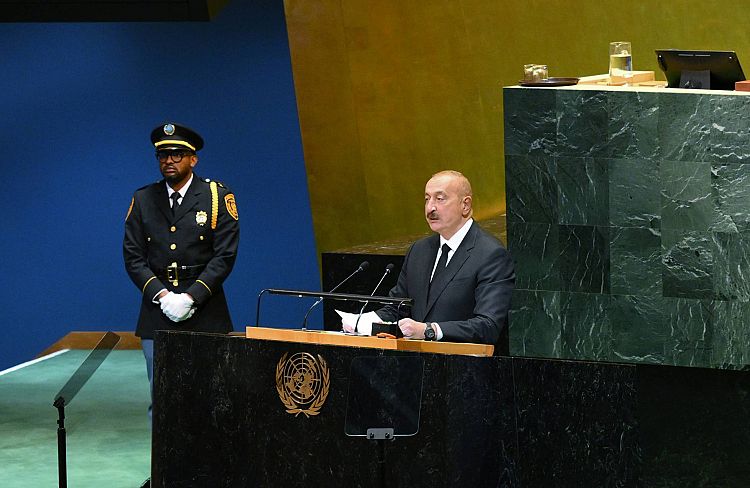 Throughout 2025, Azerbaijan expanded both bilateral and multilateral cooperation frameworks, enhancing its international credibility and strategic autonomy. The promotion of international peace, humanitarian assistance, and peaceful conflict resolution significantly elevated the country’s global standing. Hosting major international events further enhanced Azerbaijan’s political influence and reinforced its image as a reliable and constructive international partner.
The sustainable development of bilateral relations, active engagement in multilateral institutions, and consistent advocacy of a peace agenda reflect President Aliyev’s long-term strategic vision. These policies have established a solid political and diplomatic foundation that is expected to strengthen Azerbaijan’s role in the coming years. Relations with neighboring countries—particularly Central Asian states—were a priority in 2025, boosting regional connectivity, economic cooperation, and investment flows.
Relying on internal stability and sustainable development, Azerbaijan continued its independent and pragmatic foreign policy course in line with international law. Relations with Russia were further streamlined following high-level engagements in Dushanbe, demonstrating Azerbaijan’s capacity to manage complex relations through diplomatic wisdom and constructive dialogue.
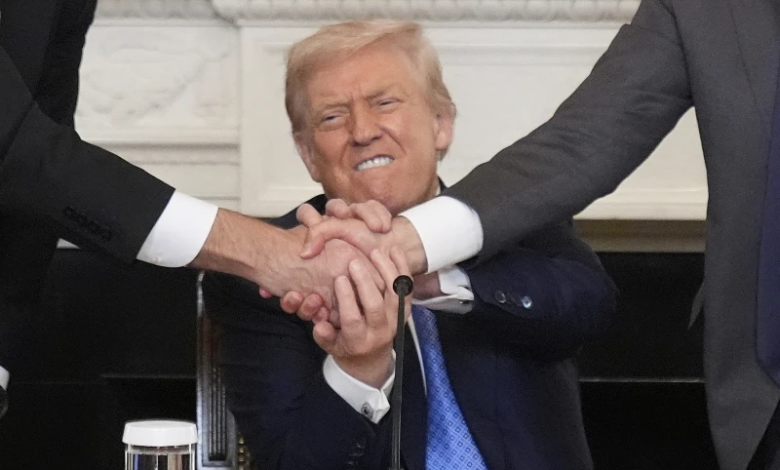
A major breakthrough in 2025 was achieved in the Azerbaijan–Armenia peace process. The peace agreement signed in the United States and the Washington Declaration of August 2025 marked a historic milestone in closing a decades-long conflict. The launch of the first freight train carrying fuel to Armenia symbolized a tangible step toward economic cooperation and post-conflict normalization. Additionally, the successful conclusion of the OSCE Minsk Process removed the conflict from the international agenda, redefining Azerbaijan’s regional security posture.
Regional and international experts widely recognized these developments as the result of President Aliyev’s active and balanced diplomacy. The year 2025 marked a transition from conflict management to post-conflict order-building, with Azerbaijan emerging as a key architect of regional connectivity and socio-economic integration.
Azerbaijan maintained strong relations with all neighboring countries, facilitating the development of new trade, transport, energy, and digital corridors across Eurasia. The country effectively translated military gains from the liberation of Karabakh into diplomatic, economic, and normative capital. Connectivity diplomacy evolved from a policy tool into a core organizing principle of Azerbaijan’s foreign policy, positioning the country as a vital hub in Eurasian geo-economics.
President Aliyev’s leadership remained central to these achievements. The fifth anniversary of the restoration of Azerbaijan’s territorial integrity carried deep political and symbolic significance, opening new opportunities for foreign policy engagement. Initiatives such as the TRIPP project strengthened connectivity between Azerbaijan and Nakhchivan, reinforcing the country’s role as a regional transportation and logistics hub.
Azerbaijan also expanded its influence through active participation in the Organization of Turkic States, the Non-Aligned Movement, the Economic Cooperation Organization (ECO), and the D-8. Chairing key forums and hosting summits in 2025 demonstrated Azerbaijan’s growing role in shaping regional and global agendas. The ECO Summit in Khankendi and the establishment of clean energy and climate-related centers further advanced economic cooperation, green transformation, and industrial development.
International recognition of Azerbaijan’s progress was underscored by the decision to host the 13th World Urban Forum in Baku in 2026. This selection reflects the country’s successful urban reforms, large-scale infrastructure projects, and meaningful contribution to global development discussions.
Central Asia remained a cornerstone of Azerbaijan’s foreign policy in 2025. Bilateral and trilateral relations were elevated to strategic partnerships, supported by frequent high-level visits. A total of 14 reciprocal presidential visits underscored the importance of Central Asia in Azerbaijan’s diplomatic calculus. Azerbaijan’s accession to the Consultative Council of the Heads of State of Central Asia and the transition from the C5 to C6 cooperation format marked a new phase of regional trust and integration.
Azerbaijan also deepened engagement with European countries, with the President holding 20 meetings with leaders from 16 European states. During 2025, Azerbaijan signed 191 bilateral and multilateral documents with 41 countries, expanded political consultation mechanisms, and increased its diplomatic presence abroad to 93 missions.
Economic diplomacy remained a key driver of Azerbaijan’s foreign policy. Investment forums, business summits, and the establishment of the ITU Regional Acceleration Center in Baku strengthened the country’s role in digitalization, innovation, and artificial intelligence.
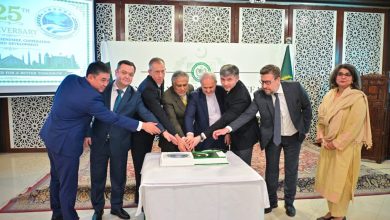
Finally, Azerbaijan–Pakistan relations witnessed significant progress in 2025, with expanded cooperation in energy, defense, trade, digitalization, infrastructure, and strategic investment. High-level visits, major investment discussions, and defense and energy initiatives reflected the growing depth of this strategic partnership.
In conclusion, Azerbaijan’s foreign policy achievements in 2025 stemmed from President Ilham Aliyev’s visionary leadership and pragmatic diplomacy, positioning the country as a key regional connector and an increasingly influential global actor.
Writer is President of The Center for Knowledge and Public Policy