Center for Economic Research and Reforms
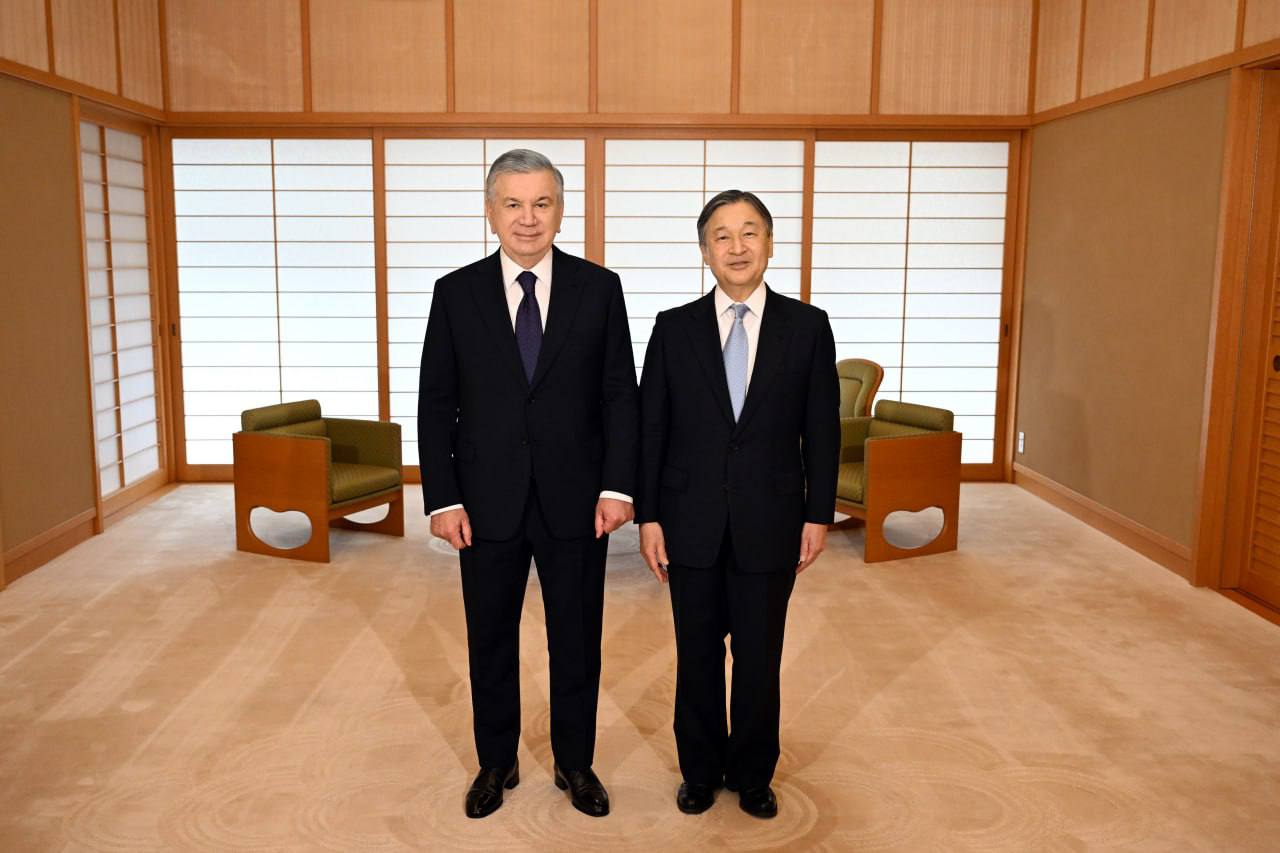
Despite the nearly 6,000-kilometer distance between Tashkent and Tokyo, the official visit of President of Uzbekistan Shavkat Mirziyoyev to Japan from December 18–20 marked a historic milestone, elevating bilateral relations to an expanded strategic partnership for future generations. The visit reaffirmed the depth of Uzbek–Japanese ties and set a forward-looking agenda focused on economic modernization, innovation, and sustainable development.
Relations between Uzbekistan and Japan rest on deep historical foundations. For centuries, Samarkand stood as a vital hub on the Great Silk Road, while Nara, Japan’s ancient capital, served as its eastern gateway. Trade and the exchange of knowledge along this route forged enduring cultural and civilizational connections between the two regions. Today, this shared heritage is symbolized by the twinning of Samarkand and Nara.
Since Uzbekistan gained independence, relations with Japan have evolved into a stable and mutually beneficial partnership. Japan has consistently emerged as one of Uzbekistan’s key technological, financial, and investment partners. In recent years, this cooperation has gained remarkable momentum, particularly following Uzbekistan’s comprehensive economic reforms.
 Japanese institutions such as the Japan International Cooperation Agency (JICA), the Japan Bank for International Cooperation (JBIC), and the Japan External Trade Organization (JETRO) play a central role in advancing bilateral economic ties. Cooperation with JICA has reached the level of strategic partnership, with an active project portfolio exceeding $8 billion and additional initiatives worth more than $3 billion under consideration in healthcare, energy, transport, education, and industry. During the visit, new agreements were signed on economic zones, agriculture, medical equipment supply, entrepreneurship support, and the establishment of a special economic zone for Japanese investors based on Japanese standards.
Cooperation with JBIC has also expanded rapidly. The current portfolio exceeds $5 billion, covering petrochemicals, energy, telecommunications, infrastructure, and light industry. Discussions during the visit focused on enhancing the effectiveness of existing projects and preparing new initiatives valued at over $10 billion.
Trade relations have demonstrated strong growth. Between 2017 and 2024, bilateral trade more than doubled from $166.2 million to $388.6 million, with 2024 alone registering a 64.1% increase. Japan’s exports to Uzbekistan are dominated by machinery and equipment, while Uzbekistan exports services, chemical fertilizers, textiles, agricultural products, radioactive elements, and jet fuel.
Investment cooperation has expanded significantly. Over the past eight years, the number of Japanese companies operating in Uzbekistan has increased tenfold, with total investment commitments exceeding $20 billion. Leading corporations such as Sojitz, Toyota Tsusho, Sumitomo, Itochu, Kyoto Plaza, Balcom, and Shikoku Electric are implementing large-scale projects in energy, infrastructure, tourism, IT, and healthcare.
Sojitz Corporation is developing major initiatives, including a combined-cycle power plant in Syrdarya, a multidisciplinary hospital, a new international airport in Tashkent, and a wind power plant. During the visit, support was expressed for its plans to modernize clinics and educational institutions, develop green energy corridors, upgrade gas compressor stations, and participate in the Japanese special economic zone.
Sumitomo Corporation is constructing solar power plants and energy storage systems in Samarkand region, with plans for wind energy projects in Karakalpakstan. President Mirziyoyev proposed adopting a Cooperation Program with Sumitomo through 2030. Longstanding cooperation with ITOCHU Corporation covers mechanical engineering, geology, and infrastructure, including agreements on exporting critical minerals. New areas discussed include water purification, automotive manufacturing, air traffic control modernization, and public-private partnerships. Additionally, JOGMEC and ITOCHU are jointly developing uranium and precious-metal deposits in Uzbekistan.
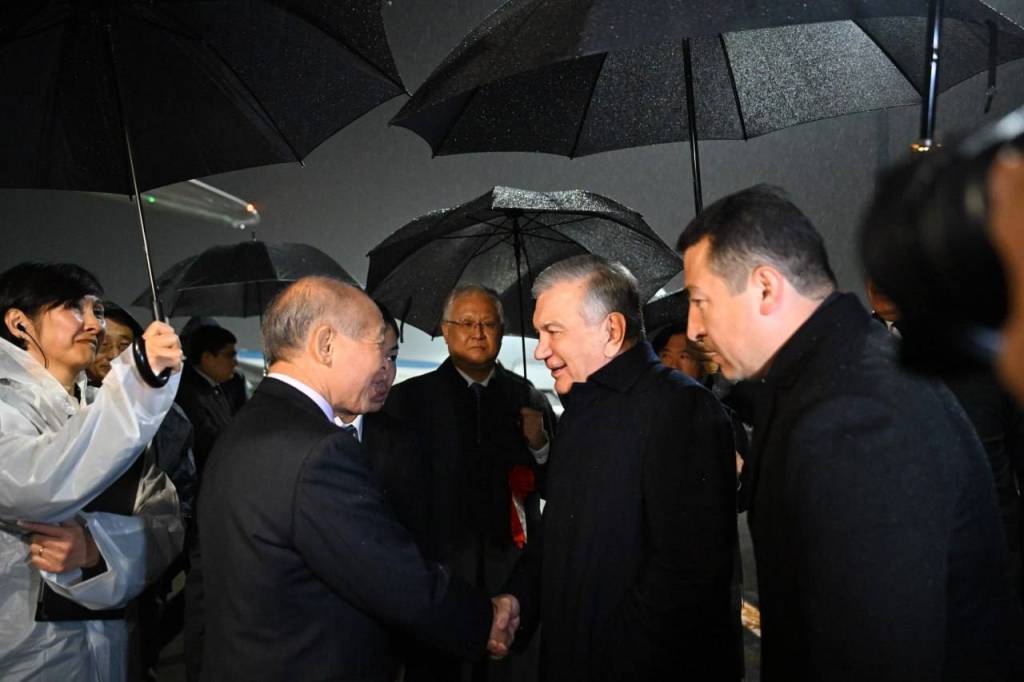 During high-level negotiations with Japanese leaders, priority areas were identified for advancing the strategic partnership, including green energy, industrial decarbonization, information technology, critical minerals, healthcare modernization, and tourism infrastructure. To implement over $12 billion in new projects, Uzbekistan proposed establishing a joint investment platform, launching a Japanese-style special economic zone in Samarkand, expanding the “One Village – One Product” program, and hosting the first Uzbekistan–Japan Regional Forum in Samarkand next year.
A pivotal component of the visit was President Mirziyoyev’s meeting with Japanese business leaders, where he emphasized a qualitative shift in cooperation. Japanese firms are no longer merely contractors but are investing directly, forming joint ventures, transferring technology, and contributing to human capital development. Priority areas for future cooperation include renewable energy, energy storage, critical mineral processing, mechanical engineering, digitalization, artificial intelligence, and advanced industrial zones.
The visit culminated in the signing of the Joint Statement on Expanded Strategic Partnership for Future Generations, elevating bilateral relations to a new level. A comprehensive package of agreements was also concluded in education, healthcare, environmental protection, water management, transport, urban development, agriculture, tourism, and disaster-risk reduction.
Looking ahead, Uzbekistan holds significant untapped export potential to Japan, including copper products, textiles, aluminum goods, fruits, nuts, and electrical equipment. Japan’s experience in innovation clusters, smart agriculture, and technology commercialization offers valuable models for Uzbekistan’s modernization efforts.
Overall, President Mirziyoyev’s visit has become a powerful catalyst for deepening Uzbek–Japanese cooperation, strengthening economic ties, accelerating modernization, and laying a durable foundation for prosperity and opportunity for future generations.