C5+1 Summit in Washington: Central Asian Leaders Seek New Era of U.S. Partnership on Trade, Energy, and Critical Minerals
By Assel Satubaldina

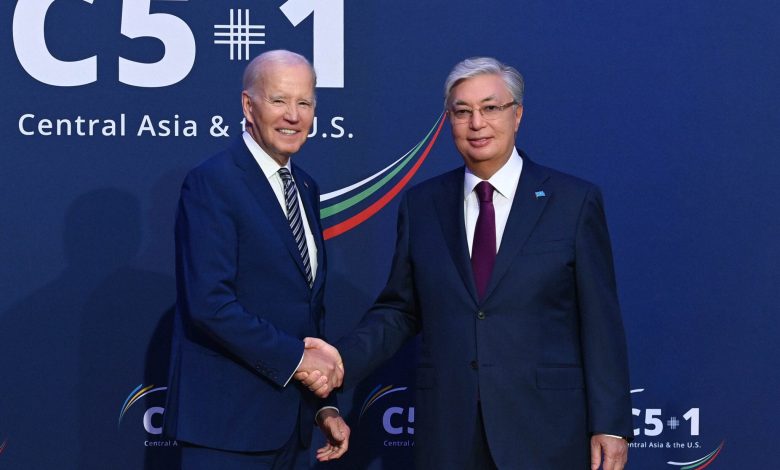
Central Asian leaders will convene in Washington on Nov. 6 for the C5+1 Summit with U.S. President Donald Trump, marking the tenth anniversary of the dialogue platform that anchors America’s engagement with Kazakhstan, Kyrgyzstan, Tajikistan, Turkmenistan, and Uzbekistan.
This second leaders’ summit since the initiative’s 2015 launch comes at a pivotal time for both sides. The U.S. is seeking to strengthen regional security, supply chains, and energy links, while Central Asian governments aim to diversify partnerships and attract investment in infrastructure, technology, and critical minerals.
A Decade of C5+1 Diplomacy
Launched in 2015 as a mechanism for structured engagement between Washington and Central Asia, the C5+1 format has evolved from ministerial-level meetings into a multi-tiered partnership encompassing energy, economic, and security cooperation. A permanent secretariat was added in 2022, and in 2023, then-President Joe Biden hosted the first presidential-level C5+1 gathering in New York on the sidelines of the UN General Assembly.

This week’s summit will include bilateral meetings, business conferences, and high-level policy sessions, focusing on digitalization, artificial intelligence, and regional connectivity.
Kazakhstan at the Center of Regional Trade
Kazakhstan, which accounts for nearly 97% of Central Asia’s exports to the U.S., expects the Washington summit to inject new momentum into trade and investment. Bilateral trade between the two nations reached $4.2 billion in 2024, up 4.1% from the previous year. Exports of crude oil, uranium, and silver surged, while imports from the U.S. included aircraft, pharmaceuticals, and advanced machinery.
Despite a temporary slowdown in 2025, Astana remains optimistic. “The Trump administration views the C5+1 as a vital mechanism for regional cooperation,” said Alisher Tastenov, senior analyst at the Kazakhstan Institute for Strategic Studies. He noted that recent U.S.-Kazakh talks reaffirmed cooperation in security, technology, and critical minerals, signaling a more strategic phase in bilateral relations.
Expanding U.S. Focus on Central Asia
The summit follows a series of high-level U.S. visits to Astana and Tashkent, underscoring what analysts see as a renewed American focus on direct regional engagement.
“The timing of this year’s summit is fortuitous,” said Darren Spinck, managing director at the Washington-based Janus Forum. “We can expect U.S.-led investment in infrastructure, mining, and resource development across the Trans-Caspian region.”
Spinck described Kazakhstan and Azerbaijan as the two “pillars” of Washington’s Trans-Caspian strategy, highlighting the country’s $4.2 billion purchase of U.S.-built Wabtec locomotives as a signal of deepening infrastructure cooperation.
However, he cautioned that Washington must not view Central Asia merely as a raw material source. “The Trump administration’s commitment to long-term collaboration in AI, advanced technology, and education suggests a more sustainable, mutually beneficial approach,” Spinck said. He also proposed eventually expanding the format to a “C5+3” to include Azerbaijan, Armenia, and Georgia, creating a unified Eurasian economic corridor from Kazakhstan to Turkey.
Critical Minerals at the Core
A key theme of the Washington talks will be critical minerals — the building blocks of the global green and digital economies.
“Central Asia holds at least 25 of the 54 minerals the U.S. defines as ‘critical,’” said Edward Lemon of Texas A&M University’s Bush School of Government, citing the region’s vast deposits of manganese, chromium, zinc, and uranium. Kazakhstan alone produces 43% of the world’s uranium.
Lemon noted that Washington’s push to reduce dependence on China’s mineral supply chains aligns perfectly with Central Asia’s ambitions. “Resource-rich and strategically located, the region represents a genuine ‘win-win’ opportunity,” he said.
Commerce and Realpolitik
For Trump, the C5+1 offers an opportunity to blend diplomacy with deal-making. Analysts suggest that his administration’s transactional approach could make Central Asia’s pitch for investment more persuasive.
“Trump’s foreign policy is openly mercantilist,” said Temur Umarov, a fellow at the Carnegie Russia Eurasia Center. “Central Asia doesn’t need to distance itself from Russia or commit to democratic reforms to engage Washington — business interests are enough to attract attention.”
Umarov emphasized that U.S. involvement remains essential to sustaining the region’s multi-vector foreign policy, balancing relations with both Moscow and Beijing. “Without the U.S., that balance collapses,” he warned.
Looking Ahead
No sitting U.S. president has ever visited Central Asia — but by bringing its leaders to Washington, Trump is reviving America’s regional engagement at a crucial geopolitical moment.
Whether this summit delivers concrete outcomes or merely sets the stage for future cooperation, it signals a clear message: Central Asia is back on Washington’s strategic map, and the U.S. intends to stay engaged for the long term.