Corps Commanders Conference Reviews Security Situation and Military Operations Against Terrorist Proxies

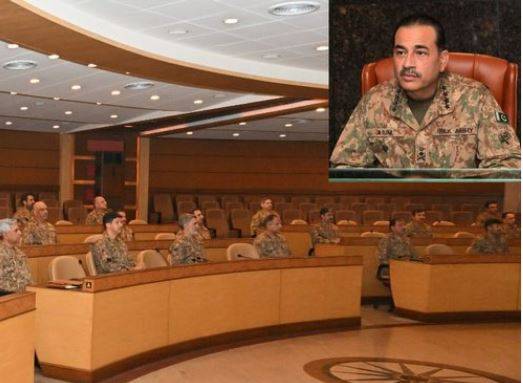
Rawalpindi: Field Marshal Syed Asim Munir chaired a Corps Commanders Conference where recent successes in counterterrorism operations against Indian-sponsored proxy groups were thoroughly reviewed. The conference commenced with a recitation of Fatiha for martyrs who sacrificed their lives in recent terrorist attacks.
Participants reaffirmed their commitment that the blood of the martyrs will not be wasted, emphasizing that safeguarding Pakistan’s citizens remains the armed forces’ top priority. The forum emphasized the need to sustain decisive and wide-ranging operations against India-backed proxy networks, strongly condemning India’s alleged attempts to destabilize the region through groups like Fitna-ul-Khawarij and Fitna-ul-Hindustan.
The Army Chief and Prime Minister’s successful diplomatic visits to Iran, Turkey, Azerbaijan, Saudi Arabia, UAE, and the United States were highlighted, with the forum briefed on Pakistan’s proactive diplomatic engagement and strategic messaging on bilateral and regional issues.
The conference reviewed the evolving security dynamics in the Middle East and Iran, expressing concern over the increasing reliance on the use of force as a policy instrument. The forum underscored the need to enhance self-reliance, national cohesion, and resilience amid these challenges.


Rejecting India’s attempts to internationalize regional conflicts through third-party involvement, the Army Chief described such moves as baseless and warned against India’s misleading portrayal as a regional security provider. The global community is increasingly apprehensive about India’s expansionist ambitions and extremist tendencies.
Updates on Pakistan Army’s strategic innovations and tri-service coordination were presented, with commendation given to the Navy and Air Force leadership for strengthening operational harmony.
The Army Chief expressed full confidence in the Pakistan Army’s preparedness to meet any emerging threats to national security.