Central Asian countries should deepen engagement with the United States carefully, balancing opportunities for cooperation with the risks of geopolitical dependence and regional instability. Writing in Daily Sabah, Turkish foreign policy and Central Asia expert Zeynep Gizem Özpınar argues that while Washington’s expanding outreach offers economic, security and diplomatic advantages, governments in the region must weigh long-term consequences to safeguard strategic autonomy, avoid entanglement in great-power rivalries and protect national interests in an increasingly competitive global order.
Republished by The Caspian Post, the article stresses that Central Asia should use its mineral wealth to strengthen independence rather than become trapped in global power competition.
The 21st-century global power struggle is evolving beyond traditional hydrocarbon geopolitics. The relatively predictable balances of the oil and gas era are being replaced by competition over raw materials, driven by narratives surrounding the “green transition,” energy security and advanced technology.
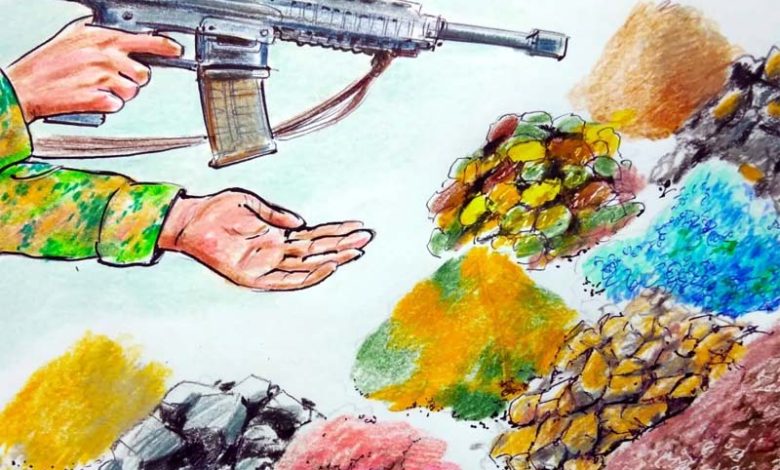
Today, strategic minerals — including lithium, cobalt, copper and rare earth elements — define the contours of global rivalry. From electric vehicles and semiconductors to defence systems and artificial intelligence infrastructure, modern technological ecosystems depend heavily on these resources. As a result, critical minerals now play a decisive role in technological superiority and military deterrence.
-
 PU CEMB hosts COMCEC & COMSTECH funded 4-day international training workshopSeptember 22, 2026
 -
 Uzbekistan: Where History Meets the FutureSeptember 1, 2026
This shift has returned Central Asia — described a century ago by Halford Mackinder as the “Heartland of Eurasia” — to the center of global politics. Unlike the past, however, the contest is no longer about territorial dominance but access to vital elements of the periodic table. Kazakhstan’s rare earth reserves, Uzbekistan’s copper and uranium deposits, and the region’s broader mineral potential have made Central Asia indispensable in competition among major powers.
From Washington’s perspective, access to critical minerals has become a national security priority. Recent US strategic documents frame supply chains not merely as economic matters but as security concerns. The 2021 presidential executive order “America’s Supply Chains” explicitly identified dependence on China in sectors including critical minerals as a national security risk.
In this context, caution toward Washington should be viewed not as ideological opposition but as a rational geopolitical calculation aimed at preserving sovereignty and strategic flexibility.
Critical Mineral Hegemony
For the United States, critical minerals now underpin military capability, technological leadership and claims to global influence. President Donald Trump’s 2017 executive order on securing reliable mineral supplies marked the first time such resources were formally placed within a national security framework, shifting them from economic debate into strategic discourse.
This securitization intensified under the Biden administration. The 2022 US National Security Strategy identifies critical minerals and advanced technology inputs as central to strategic competition with China, acknowledging that supply chains themselves have become geopolitical tools and that economic interdependence can create vulnerability rather than stability.
Taken together, these policy documents signal a new phase in US foreign policy in which trade and investment are deeply securitized. For Central Asia, this means engagement with Washington involves not only economic opportunities but also exposure to the pressures of great-power rivalry.
While US outreach is framed around investment, technology transfer and alternative supply chains, it also aims to counter China’s growing influence. This dynamic risks placing Central Asian states between China’s economic pull and US sanctions and regulatory pressure, turning critical minerals into bargaining chips rather than guaranteed engines of prosperity.
Lessons from the Resource Curse
The experience of Venezuela offers a cautionary example. The country’s economic and institutional collapse demonstrates that possessing strategic resources does not automatically produce stability or development. When natural wealth collides with global power interests, it can instead generate isolation and fragility through sanctions, financial restrictions and weakened state capacity.
Developments in US-Venezuela relations as of January 2026 — including the reported abduction of President Nicolas Maduro by US special forces and his transfer to New York — have intensified debates over sovereignty and extraterritorial intervention. Analysts describe such actions as a “hybrid sovereignty erosion model,” combining military, legal and economic pressure.
Subsequent political statements and plans by American energy companies to restructure Venezuela’s infrastructure suggest that natural resources are increasingly viewed not only as economic assets but also as strategic foundations for external intervention.
In this sense, Venezuela may represent an early example of methods that could emerge in the era of critical minerals. Mechanisms currently applied through oil could, in theory, be adapted to lithium, rare earth elements and other strategic metals in Central Asia.
Governments pursuing resource nationalism, independent pricing policies or closer ties with non-Western partners may face growing normative and economic pressure. The Venezuelan case indicates that such pressure can extend beyond diplomacy and finance into challenges to sovereignty itself.
At the same time, internal vulnerabilities heighten these risks. Weak revenue management, limited industrial diversification and heavy dependence on raw-material exports increase the likelihood of “Dutch Disease,” deepening inequality while creating openings for external influence over domestic politics.
Ultimately, the region’s challenge is not choosing between Washington and Beijing. The strategic priority, the article argues, is building institutional strength and regional cooperation that preserves room for maneuver between competing powers. Negotiating individually with major powers exposes states to structural imbalances, whereas coordinated regional policies — such as a joint critical minerals council — could better protect Central Asia’s long-term strategic autonomy.