Smearing Pakistan with Blood: How vested interests hijacked Bondi Horror to push Anti-Pakistan agenda

Smearing Pakistan with Blood: How India’s Disinformation Ecosystem Weaponized the Bondi Tragedy
On December 14, 2025, a terrorist attack targeted a Hanukkah celebration (“Chanukah by the Sea”) at Sydney’s Bondi Beach, organized by Chabad of Bondi. Australian authorities confirmed at least 12 deaths, including the attacker, and 29 injuries in what they clearly identified as an antisemitic act of violence. Prime Minister Anthony Albanese and senior law-enforcement officials described the incident as a deliberate attack on Australia’s Jewish community and a serious assault on public safety and social harmony.
While Australian authorities emphasized facts, investigation, and victim support, the tragedy was almost immediately appropriated by external actors for geopolitical purposes. Instead of restraint and responsibility, India’s media ecosystem moved swiftly to redirect blame toward Pakistan, despite the absence of any evidence linking the incident to Pakistan in any form.
Establishing the Facts: Australian Authorities Confirm a Local Perpetrator

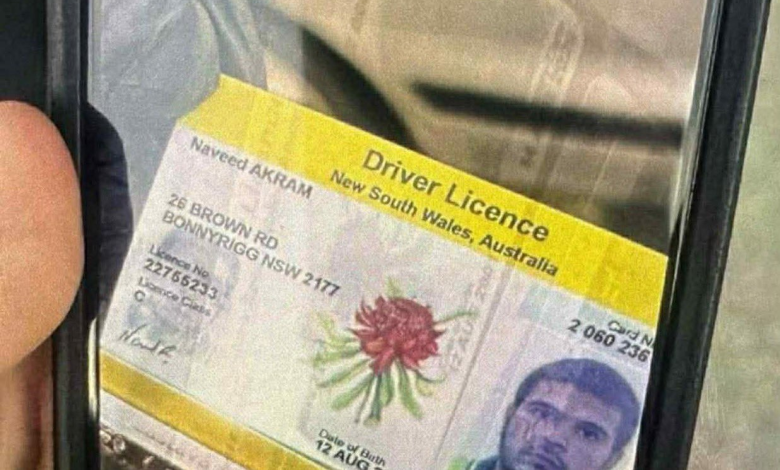
One of the attackers was identified as Naveed (or Navid) Akram, a 24-year-old resident of Bonnyrigg in western Sydney. Credible reporting by ABC News, The Sydney Morning Herald, and Daily Mail Australia, citing Australian law-enforcement sources, consistently described him as a locally based individual with employment and social ties within New South Wales.
Police investigations, including raids at his family residence in Sydney’s south-west, reinforced the conclusion that the case was entirely domestic in nature. At no stage did Australian authorities attribute foreign nationality, cross-border involvement, or external institutional links to the attacker.
Deliberate Identity Manipulation: Absence of Any Pakistani Link
All reliable evidence confirms that Akram was an Australian resident whose life and activities were confined within Australia.
ABC News and The Sydney Morning Herald identified him as a long-term Sydney resident, with law-enforcement action focused exclusively on his local environment.
He had documented local employment history and established community connections in New South Wales.
Crucially, no official Australian source—including ABC News, The Guardian Australia, Reuters, or The New York Times—identified him as Pakistani by nationality, birth, or citizenship. Police briefings made no reference to Pakistan, reinforcing that foreign linkage claims had no investigative basis.
This absence of evidence is not incidental; it directly contradicts the narrative later promoted by Indian media outlets.
India’s Media Ecosystem and the Manufacturing of a False Pakistani Narrative
Despite the clarity of official information, several Indian media outlets—including Zee News, Economic Times, Financial Express, and New Indian Express—prematurely labeled Akram as a “Pakistani national,” “Pakistani-origin,” or “from Lahore.”
These claims were based on unverified social-media posts, speculative commentary, and manipulated visuals, including alleged images of the attacker in Pakistani sports attire. None of these assertions were authenticated by Australian authorities, and none were supported by documentary evidence.
This behavior reflects a recurring pattern within India’s right-leaning media ecosystem, where Pakistan is routinely inserted into unrelated global incidents involving Muslim perpetrators. Such practices align with a broader strategy of narrative manipulation, where tragedy is exploited to stigmatize Pakistan and reinforce pre-existing geopolitical hostility.
This was not careless reporting; it was deliberate narrative construction.
Hybrid Warfare Through Disinformation: Pattern, Not Exception
The Bondi incident cannot be viewed in isolation. India’s use of disinformation against Pakistan follows a well-documented pattern visible in earlier crises, where media narratives are deployed as instruments of hybrid warfare.
By injecting Pakistan’s name into unrelated acts of violence, Indian media outlets seek to internationalize suspicion, damage Pakistan’s reputation, and dominate the information space before facts can intervene. Corrections, if issued at all, rarely receive comparable attention.
Such practices undermine journalistic ethics and distort public understanding, replacing evidence-based reporting with politically motivated storytelling.
Collapsing the Conspiracy Layer: Google Trends Claims Exposed
When factual claims failed to hold, a secondary layer of misinformation emerged. A viral post on X alleged that Google searches for “Naveed Akram” spiked in Israel, Iran, and the United States before the attack, implying foreknowledge or coordination.
Independent verification conclusively debunked this claim.
Google Trends data shows no abnormal or significant pre-attack search activity for the name.
Search interest increased only after the attack became public.
The visuals used in the viral video appear manipulated and inconsistent with authentic Google Trends outputs.
No credible journalist, research institution, or investigative body validated the allegation.
This conspiracy narrative circulated exclusively within misinformation networks and served to sustain suspicion where evidence did not exist.
The Ignored Reality: A Muslim Who Saved Lives
While Indian media outlets were busy constructing a false Pakistani villain, they largely ignored a reality that directly contradicted their framing.
Ahmed al-Ahmed, a 43-year-old Muslim Australian, fruit shop owner, and father of two from Sutherland Shire, intervened during the attack, physically confronting one of the shooters and disarming him despite being shot twice.
Verified footage confirms his actions. NSW Premier Chris Minns publicly described him as a “genuine hero,” crediting his courage with saving multiple lives. His family confirmed that his actions were driven solely by instinct and responsibility toward others.
This act of heroism exposes the moral and factual bankruptcy of narratives that seek to associate Muslims—or Pakistan—with violence while ignoring Muslim acts of solidarity and courage.
Individual Crime, Collective Smearing: Exposing the Strategic Intent
This antisemitic terrorist attack was the act of an individual and does not represent any nation, religion, or ethnic group. Attempts to link Pakistan to the Bondi tragedy constitute deliberate narrative warfare rather than legitimate analysis.
India’s repeated deployment of such tactics reflects an effort to weaponize tragedy, promote Islamophobic undertones, and advance geopolitical hostility under the guise of media reporting. These practices damage global counterterrorism cooperation and distract from victim support and accountability.
As Prime Minister Albanese correctly stated, “An attack on Jewish Australians is an attack on every Australian.” Exploiting such suffering to stigmatize Pakistan undermines shared values of justice, truth, and responsible journalism.
Honoring victims, supporting affected communities, and recognizing genuine heroes must take precedence over manufactured blame and politically motivated disinformation.
Sources: ABC News, The Guardian Australia, The Sydney Morning Herald, Reuters, The New York Times, Daily Mail Australia.
Note: No official Australian authority has confirmed any Pakistani nationality or origin of the attacker. Claims suggesting otherwise originate from unverified social-media content and politically aligned foreign media outlets.