China Moves to Reinforce Its Central Asia Influence after U.S. Push on Critical Minerals

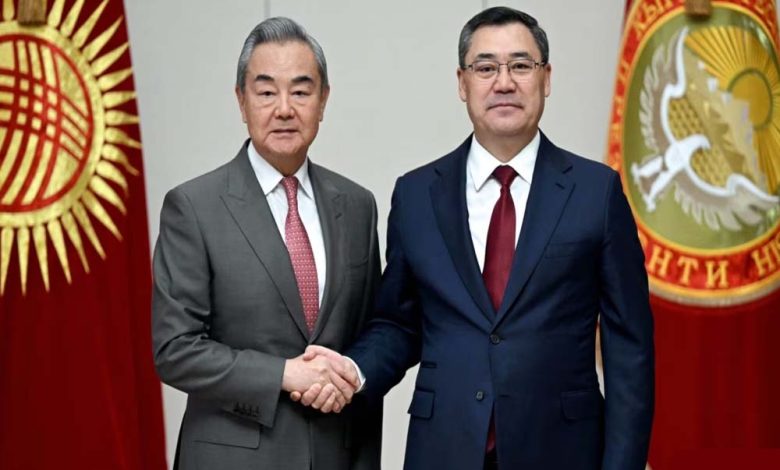
Chinese Foreign Minister Wang Yi is in Kyrgyzstan as part of a three-country tour aimed at reaffirming Beijing’s position as Central Asia’s leading economic partner, following renewed U.S. diplomatic outreach at a high-profile summit in Washington earlier this month.
U.S. President Donald Trump hosted the five Central Asian presidents at the White House in early November for talks centered on tapping the region’s abundant and strategically important critical mineral reserves. During the summit, Washington signed tens of billions of dollars in prospective agreements, including a $1.1 billion tungsten mining deal between Kazakhstan and U.S. firm Cove Kaz Capital. According to CEO Pini Althaus, Trump and U.S. Commerce Secretary Howard Lutnick helped secure the agreement to prevent Chinese companies from developing the strategic deposit.
Wang’s visit marks his first trip to Kyrgyzstan in three years. His regional tour, which runs until November 22, includes additional stops in Tajikistan and Uzbekistan. He arrived in Bishkek on November 19 and met with Kyrgyz President Sadyr Japarov, who praised Chinese leader Xi Jinping and said bilateral relations were now at a “historic high,” according to a readout from the Kyrgyz presidency.
Ahead of the visit, China’s Foreign Ministry said Wang’s mission would focus on strengthening Beijing’s already robust ties with Central Asia by accelerating the implementation of agreements worth billions of dollars that were signed at the China–Central Asia summit in Kazakhstan in June.

“[This visit] will enhance political mutual trust and traditional friendship, deepen high-quality Belt and Road cooperation, and bring about more positivity to the building of the China–Central Asia community,” Foreign Ministry spokeswoman Mao Ning said on November 17.
China’s Projects Moving Toward Implementation
One of the key initiatives highlighted at the China–Central Asia summit was the long-delayed, multibillion-dollar China–Kyrgyzstan–Uzbekistan railway. The project aims to accelerate East–West trade by cutting delivery times between China and Europe by up to a week and giving Kyrgyzstan and Uzbekistan greater access to overland routes.
Construction began in July 2024. Kyrgyz Transport and Communications Minister Absattar Syrgabaev said on November 12 that the 450-kilometer line would be completed within five years. The project is expected to cost up to $6 billion, though the precise contributions of each country remain undisclosed. Syrgabaev said only that “Kyrgyzstan has already fulfilled its funding obligations, and both Uzbekistan and China are also financing their respective shares.”
Additional deals were signed on the sidelines of the Shanghai Cooperation Organization summit in China in September. Kazakh President Qasym-Zhomart Toqaev concluded more than 70 commercial agreements worth around $15 billion, including major investments in oil and gas, petrochemicals, transport corridors, logistics hubs, and digital technologies. Kazakhstan also secured an additional $1.5 billion in oil and gas investments from Chinese firms.
China’s Expanding Footprint at Regional Summits
Uzbekistan announced 13 new mining-related agreements with China after the summit, including uranium projects worth a reported $5 billion. In Tajikistan, Chinese companies dominate the mining sector. The Tajik government has defended its openness to Chinese investment by noting that Beijing is the only foreign partner willing to undertake projects of such scale.
However, a 2024 RFE/RL investigation found that major Chinese-run mines in Tajikistan have caused serious air and water pollution. Tajik authorities have reportedly ignored environmental violations to avoid jeopardizing Chinese investment in the country, which is Central Asia’s poorest.
Central Asia holds extensive deposits of copper, gold, and rare earths, and produces roughly half the world’s uranium—making access to these resources a growing point of tension in U.S.–China rivalry. Both China and Russia maintain major roles in the region’s critical minerals sector.
In rare earth elements specifically—17 minerals essential for technologies ranging from wind turbines and smartphones to fighter jet engines—China controls more than 70 percent of mining, 90 percent of separation and processing, and 93 percent of global magnet production.
Brawl Highlights Local Tensions over Chinese Labor
Wang’s visit also coincided with renewed scrutiny of Chinese companies operating in Kyrgyzstan. According to the Kyrgyz presidency’s readout, Wang said Chinese firms have been instructed to comply strictly with Kyrgyz laws and respect local customs. The remark appeared to reference a violent brawl on November 15 involving dozens of Kyrgyz and Chinese construction workers in a northern village following a traffic dispute.
Police detained 16 people and brought in another 44 for questioning, including Chinese nationals. One Kyrgyz worker was hospitalized. The incident fueled online anger in the country, where resentment over Chinese labor practices has periodically sparked protests. A key source of frustration is the practice of Chinese firms importing their own workers rather than employing locals.
Kyrgyz Foreign Minister Jeenbek Kulubaev, who also met with Wang, rejected claims that Chinese workers were flooding the labor market or displacing Kyrgyz citizens.