Historically, profound shifts in international politics have emerged after major shocks—wars, revolutions, and large-scale conflicts. Yet political, economic, and socio-cultural transformations can also unfold gradually over long periods. The dynamics in Central and South Asia today reflect this slower, cumulative process. While the region is experiencing rapid and even dramatic political and economic change, it has not yet witnessed a single decisive event that might be described as transformative or fateful. Nonetheless, long-term forces are clearly reshaping both regions.
Central Asia: Rapid Growth and Rising Geostrategic Value
Central Asia continues to post impressive rates of economic and demographic expansion. In 2024, the region is projected to grow by roughly 5.7% of GDP—well above the global average. Uzbekistan, Tajikistan, Kazakhstan, and Kyrgyzstan are progressing faster than many parts of the world, including Europe and Latin America, where average GDP growth in 2024 was around 2.1%. Demographically, the population is rising swiftly; several countries may soon surpass leading European nuclear powers in size.
The region’s combination of stable authoritarian governance, abundant natural resources, and strategic location has heightened global interest. Situated in the heart of Eurasia, Central Asia borders China—an ascendant superpower—and India, another rapidly developing and nuclear-armed state. Russia, the continent’s leading military and nuclear power, remains deeply influential, while nearby Iran pursues regional ambitions through its distinct political system. Against this backdrop, the C5 summit at the White House in mid-November carried its own geopolitical weight.


Washington understands Central Asia’s strategic and resource significance and has long been attuned to its internal strengths, vulnerabilities, and complicated ties with neighboring powers. Regardless of whether a Democrat or Republican occupies the White House, the U.S. is likely to continue pursuing influence in the region. While Donald Trump reduced the American footprint in some areas—particularly the Middle East—active diplomacy remains a core instrument of U.S. statecraft.
South Asia: Renewed Friction between India and Pakistan
South Asia, Central Asia’s immediate neighbor, faces its own accelerating crises. The region’s most dangerous fault line—the long-standing conflict between India and Pakistan—has entered a new and volatile phase. In April and May 2025, a deadly terrorist attack in Kashmir triggered India’s Operation Sindoor. Delhi accused Pakistan’s military of supporting the Islamist groups involved, including Lashkar-e-Taiba, which maintains a longstanding presence in Pakistani cities.
The attack bore a distinctly religious dimension: radical Islamists targeted Hindus, highlighting sectarian motives. Pakistan denies any involvement, stressing that it too suffers from extremist violence, including attacks by Tehreek-e-Taliban Pakistan. Although the subsequent India–Pakistan military confrontation was brief, tensions remain high. Both countries continue to modernize their armed forces, raising the likelihood of further escalation.
Afghanistan–Pakistan Rift: From Allies to Adversaries
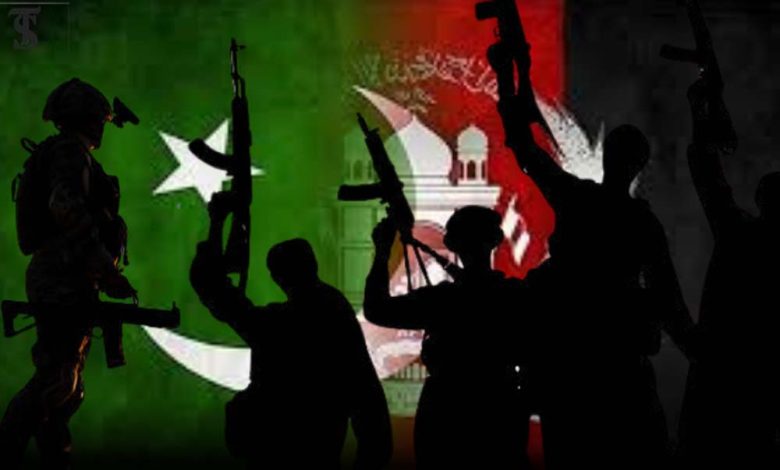
A second, unexpected conflict further complicates the regional landscape. Since the Taliban’s return to power and the restoration of the Islamic Emirate, relations between Kabul and Islamabad have deteriorated to unprecedented levels. Once close allies, the two now face recurring clashes along their shared border and are effectively locked in a cold war.
Despite Pakistan’s long-standing support for the Taliban, the movement now rejects Pakistani military influence. Pakistan, unwilling to forfeit its leverage, seeks to compel Kabul to account for its interests. This conflict shows no signs of resolution.
Afghanistan is also striving to diversify its economic partnerships. Kabul aims to reduce its dependence on Pakistan—its dominant trading partner for decades—by strengthening ties with Central Asian countries. Taliban Deputy Prime Minister Abdul Ghani Baradar has openly accused Islamabad of using trade as a “tool of political pressure,” citing continued border closures as proof that Afghanistan must seek economic alternatives.
Yet reducing reliance on Pakistan will be difficult given the depth of historic ties. Still, Afghan trade with Central Asia is rising. Commerce with the five Central Asian states has reached nearly $1.7 billion, mostly in Afghan imports such as flour, fuel, vegetable oil, and construction materials. Kazakhstan has emerged as a major partner, signing a roadmap with Kabul in 2024 to raise bilateral trade to $3 billion. Uzbekistan also plays a leading role; official data show that trade reached $1.1 billion in 2024, with plans to double it to $2 billion by 2025. Despite these gains, Pakistan remains indispensable to Afghanistan’s economy.
A Region of Opportunity—and Deepening Risks
Central and South Asia comprise rapidly developing states with growing populations and expanding economic capacities. Authoritarian governance structures provide a degree of stability, even as geopolitical pressures intensify. India stands as the region’s most powerful actor—nuclear-armed, economically ambitious, and the world’s most populous nation. Central Asian countries continue steady, though not rapid, progress, with several relying on Russia for political and economic stability.
However, expanding involvement by external Western powers risks destabilizing established balances and could provoke new conflicts—both among regional elites and between major regional players. Meanwhile, the rupture between Afghanistan and Pakistan carries long-term potential for renewed confrontation.
In short, the region stands at a crossroads. Central and South Asia face a mix of rising opportunities and serious challenges. Whether they can navigate these pressures without sliding into broader conflict remains an open question.