Rubio to Visit All Five Central Asian States in 2026 as Trump steps up Regional Outreach

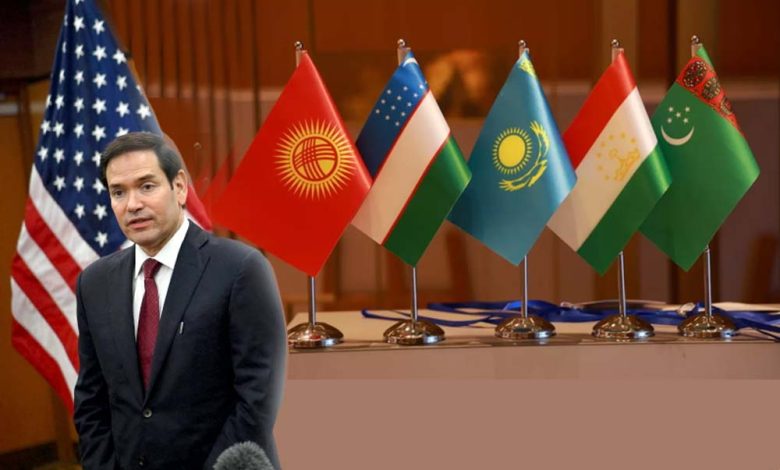
WASHINGTON: U.S. Secretary of State Marco Rubio said on Wednesday he plans to visit all five Central Asian countries next year, part of a renewed Trump administration effort to deepen engagement with the resource-rich region.
The announcement came as Rubio met the foreign ministers of Kazakhstan, Kyrgyzstan, Tajikistan, Turkmenistan, and Uzbekistan at the State Department, ahead of a high-profile White House summit on Thursday where President Donald Trump will host all five Central Asian presidents.
The discussions are expected to focus on rare earth minerals and other strategic resources in the region, which remains economically tied to Russia and increasingly influenced by China.
‘Aligned Interests’ on Natural Resources
Speaking at a reception with the ministers, Rubio said the United States shared the region’s ambition to harness its natural wealth responsibly.
“You are looking to take the resources that God has blessed your nations with, and turn them into responsible development that allows you to diversify your economies,” Rubio told the gathering.
He said he intended to visit each of the five countries in the coming year.
“All five,” Rubio said, adding that it would likely require a week-long trip. “We’ve got to work on that and make that happen together.”
Trump’s Push for Closer Ties
Deputy Secretary of State Christopher Landau, who also spoke at the event, said Trump’s invitation to the five leaders reflected the president’s personal push to engage more actively with Central Asia.
Landau and Sergio Gor, the U.S. ambassador to India and Trump’s special envoy for Central Asia, visited Kazakhstan and Uzbekistan last week to lay the groundwork for agreements expected to be unveiled during the leaders’ visit.
“The opportunities are amazing — business opportunities, many ways to partner there,” Landau said.
Congressional Initiative on Trade
Republican Senator James Risch, addressing the same reception, announced plans to introduce legislation to repeal the Jackson–Vanik trade restrictions, Cold War–era rules that limit U.S. trade with non-market economies.
Rich in minerals and energy, the five predominantly Muslim nations of Central Asia have remained closely linked to Moscow since the breakup of the Soviet Union in 1991, even as Beijing’s commercial footprint across the region has expanded.