headline
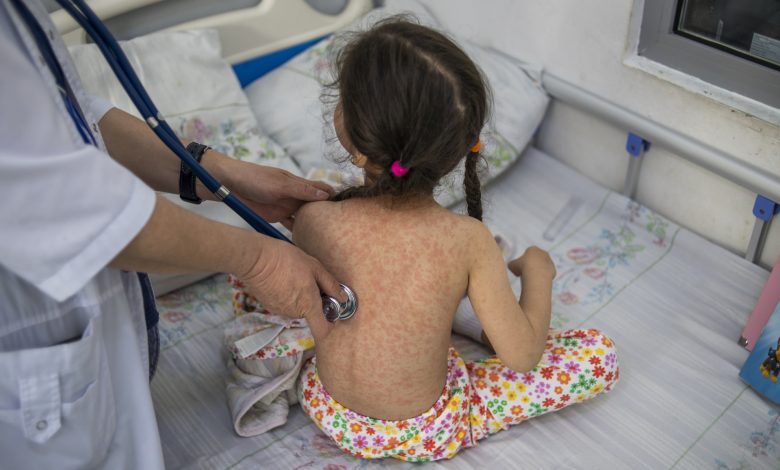
Measles, long considered a preventable disease due to widespread vaccination, is making a strong comeback across Central Asia, driven by growing immunity gaps, missed doses, and regional mobility.
WHO and UNICEF recorded 127,350 measles cases across the European Region — including Central Asia — in 2024, the highest figure since 1997, warning that falling vaccination coverage is fuelling the surge. The trend has continued into 2025 and early 2026, placing increasing strain on health systems.
Rising Cases Across the Region
Kyrgyzstan has been among the hardest hit. The country reported 7,463 cases in 2023, nearly doubling to 14,380 in 2024. By June 2025, almost 8,000 cases had already been registered, signalling a nationwide outbreak.


Kazakhstan continues to see elevated transmission, with 4,240 cases reported in 2025. By late January 2026, health authorities had confirmed 1,368 new cases, with nearly 90% occurring among unvaccinated individuals.
Uzbekistan faced a major setback in early 2026, when WHO reportedly assessed that the country had lost its measles elimination status — indicating ongoing local transmission rather than isolated imported cases.
Tajikistan responded with large-scale supplementary vaccination campaigns in late 2025, targeting districts identified as having immunity gaps. Meanwhile, up-to-date public data from Turkmenistan remains limited.
Why Measles Keeps Returning
Health experts stress that measles spreads extremely quickly whenever population immunity falls below the critical threshold of about 95% two-dose coverage. Gaps emerge when children miss vaccinations due to access barriers, migration, service disruptions, or vaccine hesitancy.
High birth rates across Central Asia continually add new children who must be vaccinated on time, while cross-border movement allows the virus to spread easily between countries.
Outbreaks also disrupt routine immunisation services as clinics become overwhelmed, creating a cycle where more children miss scheduled doses and outbreaks last longer.
Strengthening the Response
WHO and national health authorities emphasise a three-layer strategy: strong routine immunisation, aggressive catch-up campaigns for missed children, and rapid outbreak response through targeted vaccination and surveillance.
Key indicators to watch include district-level vaccine coverage, the share of cases among unvaccinated children, outbreak duration, and hospital strain.
The Bottom Line
The region’s experience shows that measles returns swiftly whenever immunity gaps grow. Sustained high vaccination coverage — not one-off campaigns — remains the only reliable defence.
With Kyrgyzstan’s prolonged outbreak, Kazakhstan’s high proportion of unvaccinated cases, and Uzbekistan’s loss of elimination status, Central Asia faces a clear warning: without continuous investment in immunisation systems, measles will remain a recurring public health threat.